3 hr
Alhambra & Nasrid Palaces Guided Tour with Skip-the-Line Tickets
- Expert local guide
- Small group
- Skip-the-line access
Alhambra Palace Tickets — Nasrid Palaces, Alcazaba & Generalife
Stucco holds the light, water keeps the time.
Compare fares, pick the fit — all bookings are mobile-voucher and eligible for free cancellation where shown.
3 hr
3 hr
3 hr 30 min
Choosing among Alhambra Palace Tickets comes down to one question: do you need the Nasrid Palaces, or just the gardens and fortress? Most first-time visitors booking an Alhambra Granada tour want the General day ticket, since it is the only daytime option that covers the full complex.
|
Top pick General (Full Complex) Includes Nasrid Palaces |
Gardens, Generalife & Alcazaba No Nasrid Palaces | Night Visit Nasrid Palaces or Generalife only | |
|---|---|---|---|
| Areas included | Alcazaba, Nasrid Palaces, Generalife, Palace of Charles V | Alcazaba, Generalife, Partal gardens only | Nasrid Palaces or Generalife (evening only) |
| Nasrid Palaces access | ✓ timed slot | — | ✓ (Nasrid option only), evening slot |
| Entry timing | Fixed Nasrid slot, flexible for rest of complex | Flexible daytime entry, no fixed slot | Fixed evening slot, short visit window |
| Typical visitor | First-time visitors wanting the complete site | Repeat visitors or those who missed Nasrid slots | Visitors seeking a quieter evening atmosphere |
| Price reference | 22.27 EUR per adult | Lower cost, partial complex only | Separate, lower-cost evening ticket |
| Best for | First-timers seeing everything in one visit | Budget visits or garden/fortress focus only | Evening-only visitors wanting Nasrid Palaces atmosphere |
| See tickets & prices |
Verdict: Book the General ticket for a complete Alhambra Palace Tickets tour that covers the Nasrid Palaces, Alcazaba, and Generalife in one visit, and only consider the Gardens or Night Visit tickets if the General ticket is sold out for your dates.
Worth it for nearly every Granada visitor
At 22.27 EUR per adult, Alhambra Palace Tickets buy the full complex: the Nasrid Palaces with their muqarnas ceilings and the Court of the Lions, the Alcazaba's Sierra Nevada ramparts, and the Generalife gardens with their water channels. Measured against comparable European landmarks, that is a fair figure for a UNESCO World Heritage site of this density, and the entrada general Alhambra covers all three zones rather than one. It pays off for first-time visitors, anyone drawn to Islamic architecture or Moorish Granada, and photographers who arrive in the 08:30–10:00 window for cooler temperatures and thinner crowds. It pays off less for travellers with a half-day in the city, or those who have already toured Córdoba's Mezquita and Seville's Alcázar and want fresh material. Guided Granada Alhambra tour options add cost on top; the ticket alone gets you inside. Skip-the-line Alhambra access matters most in July heat, when midday queues bite hardest.
Bottom line: For 22.27 EUR you get Spain's finest surviving Islamic palace complex in one visit — book the Alhambra Palace Tickets tickets and go early.
Hand-picked experiences loved by thousands of travelers
3 hours
Skip the line into the Alhambra's Nasrid Palaces, Alcazaba, and Generalife gardens with an expert local guide.
Flexible, self-guided visit
Wander the Alhambra's fountains, palaces, and fortress walls at your own pace, Nasrid Palaces not included.
3 hours
Guided walk through the Alhambra's palaces, fortress, and gardens — Granada's UNESCO icon in 3 hours.
Full day (access valid across 3 days for select monuments)
One ticket, two worlds: the Alhambra's palaces and gardens plus Albaicín's historic Islamic sites.
10 hours
Skip-the-line Alhambra tour with Nasrid Palaces, Generalife Gardens, and free time in Granada.
13 hours
Full-day trip to Granada with guided Alhambra visit, Nasrid Palaces, and Albaicín's old streets.
Start at the oldest section with watchtower views over Granada and the Albaicín
Enter at your timed slot to see the Comares Palace and Court of the Lions
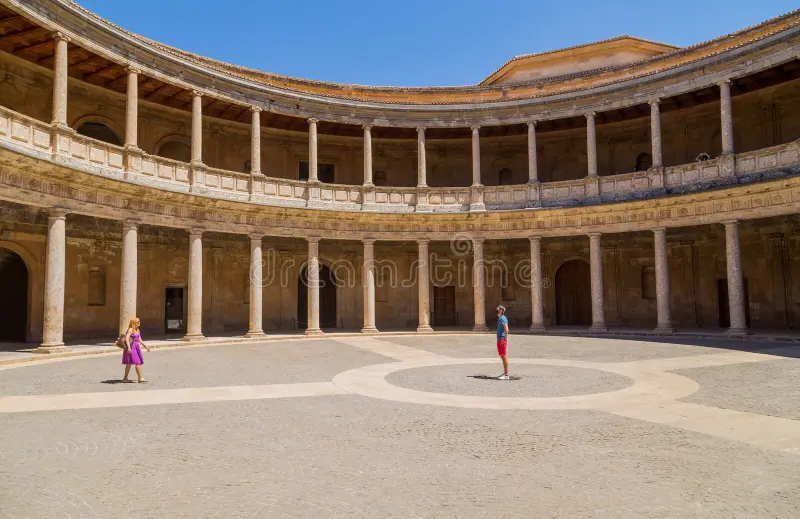
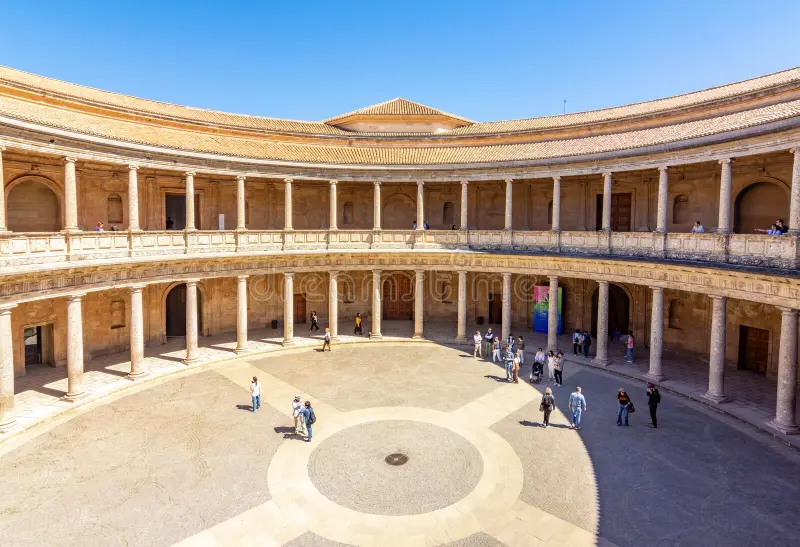
Renaissance circular courtyard contrasting with the Islamic palaces
Stroll the summer palace's terraced gardens and water features
Walk back downhill toward the Albaicín and Plaza Nueva
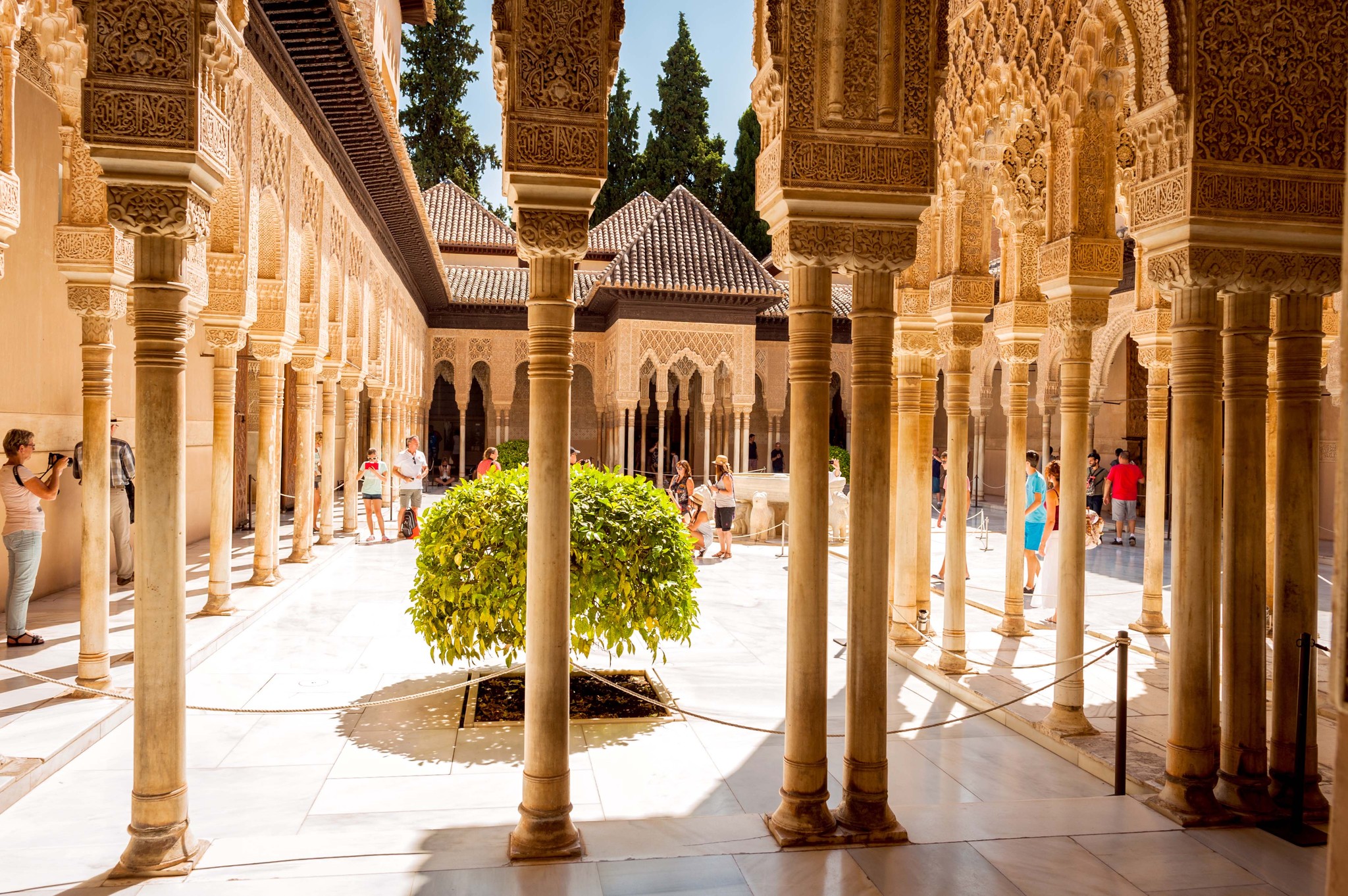
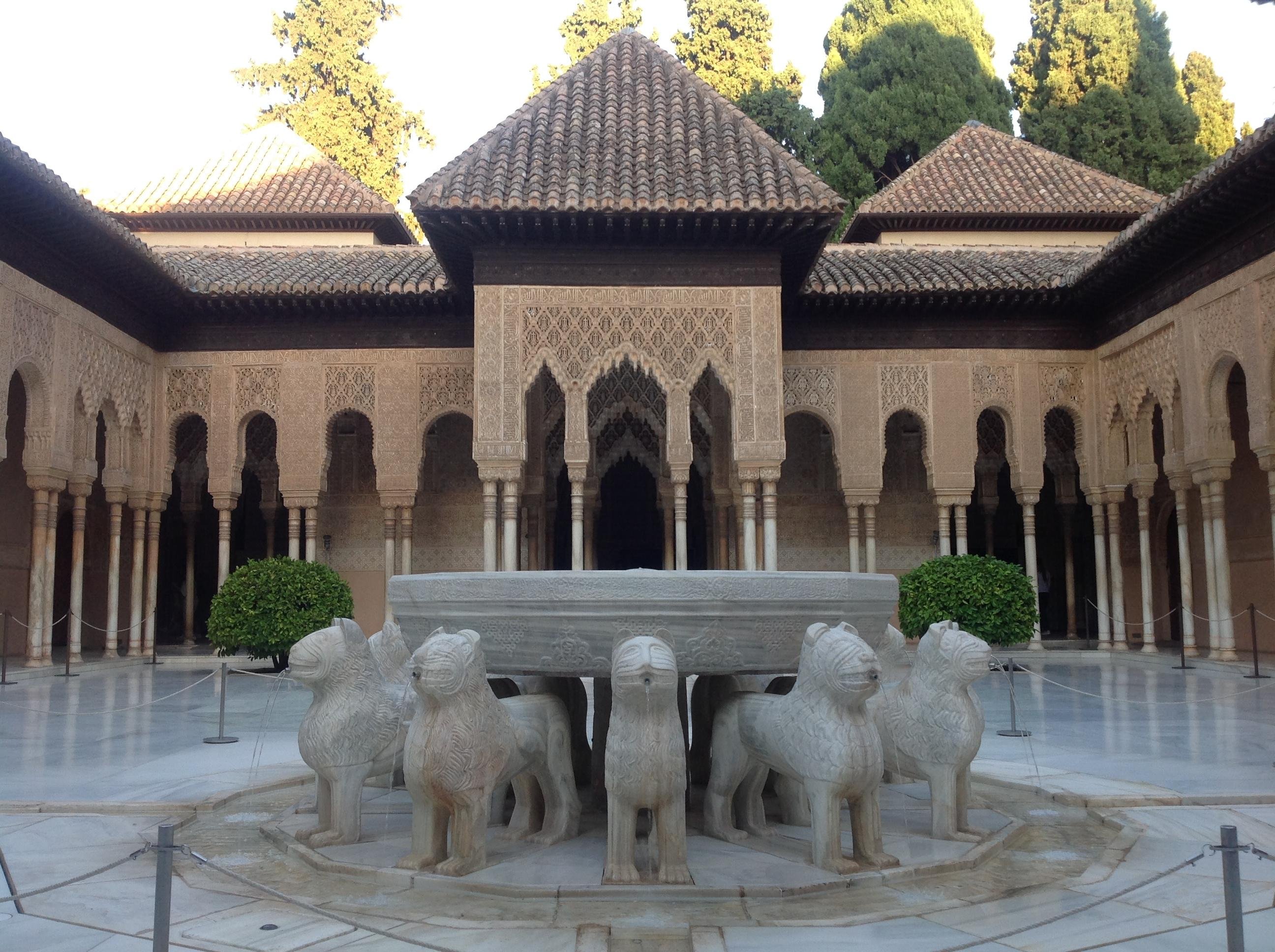
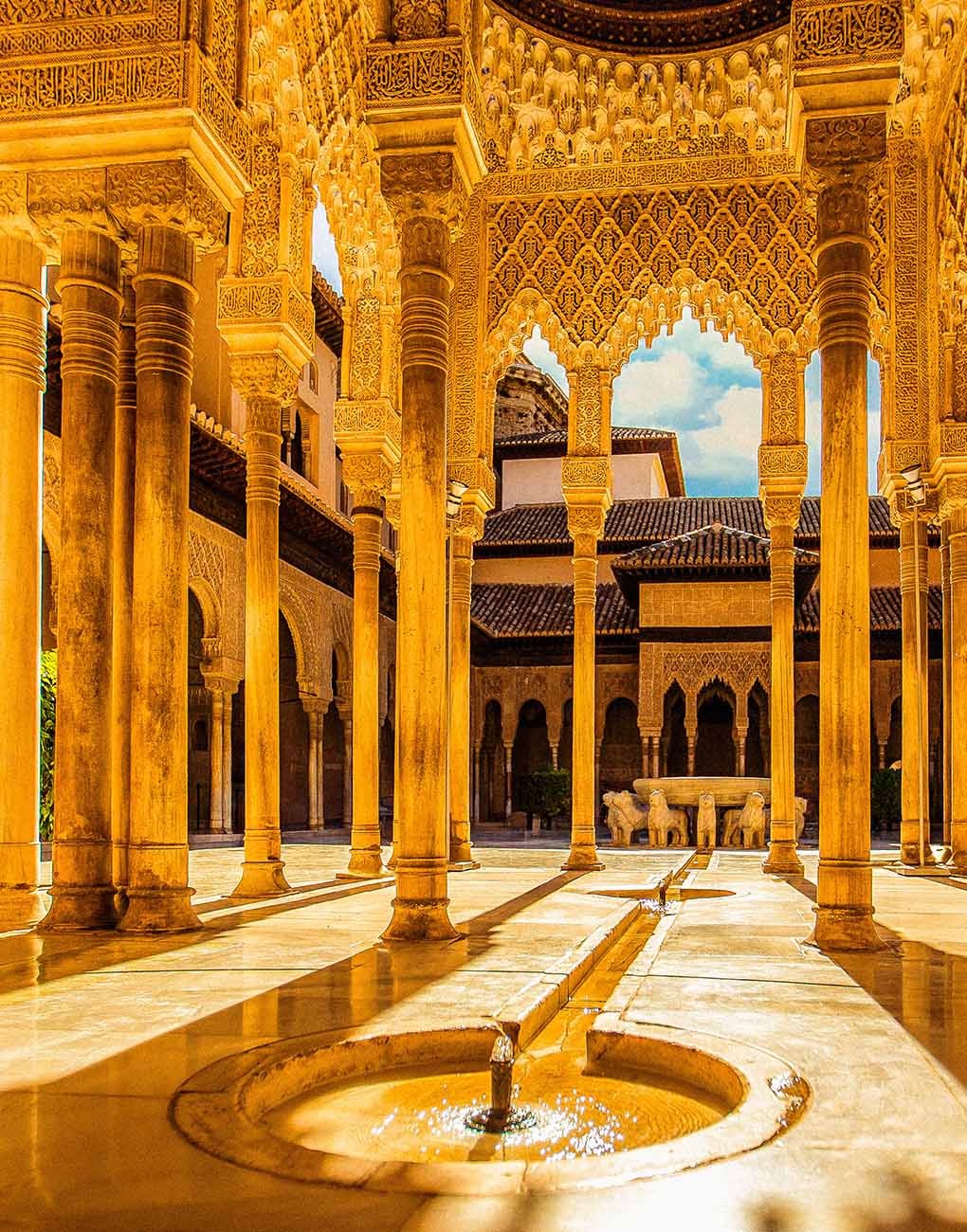
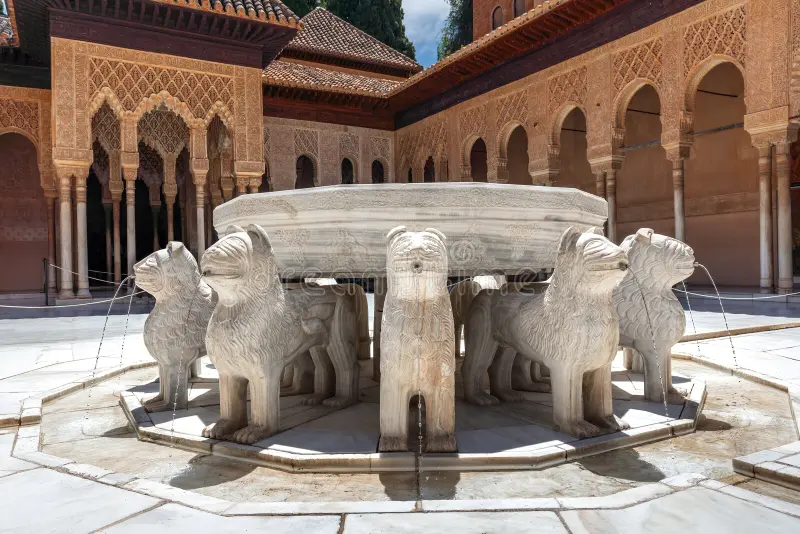
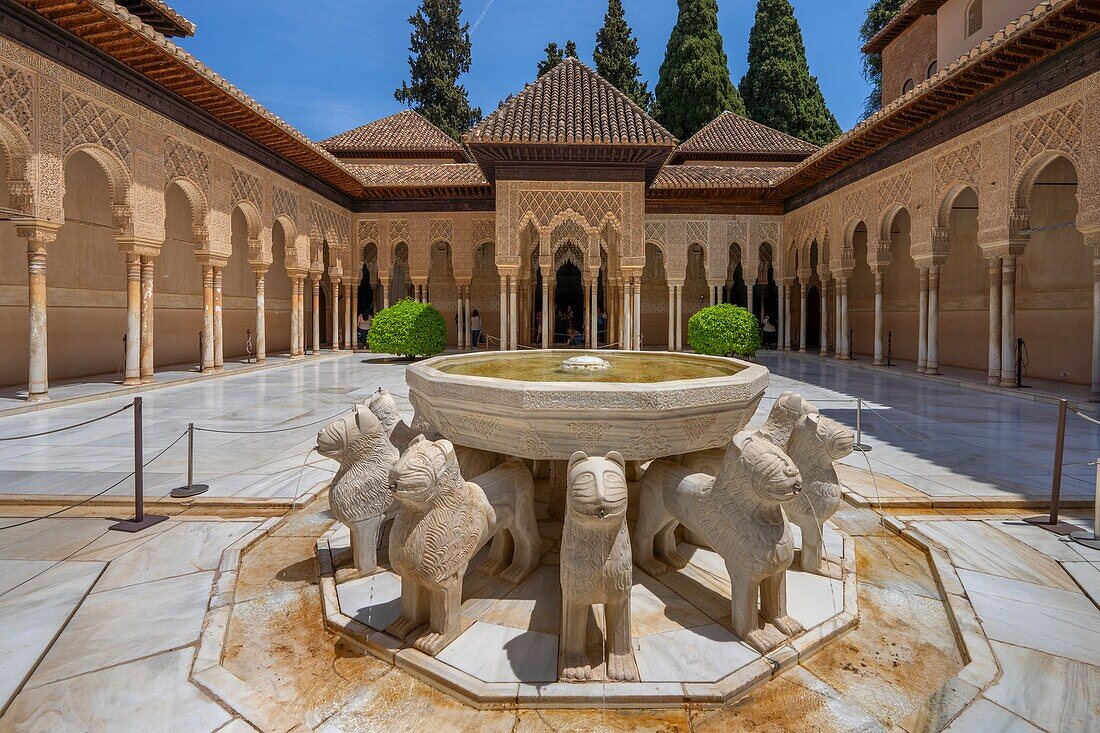
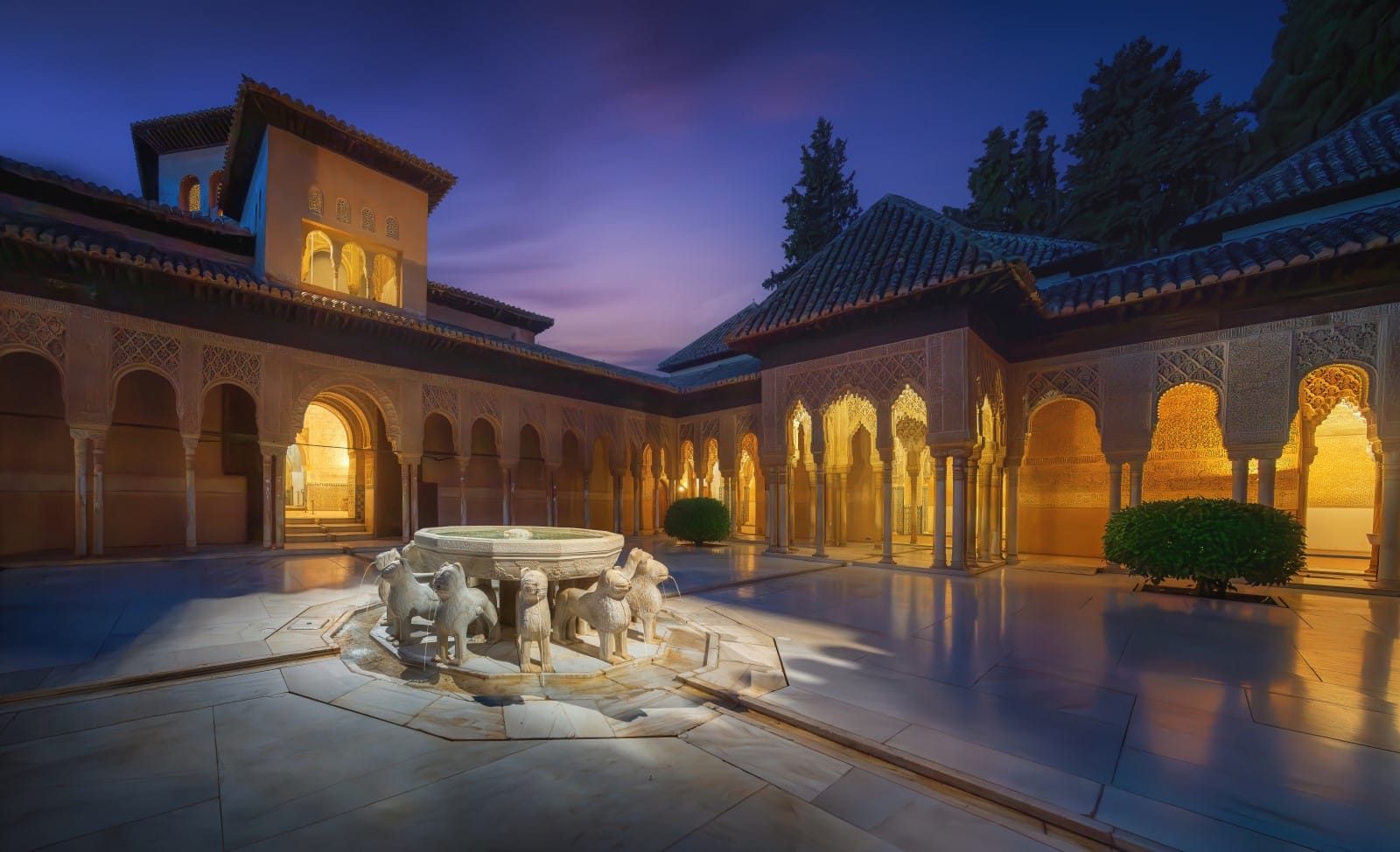
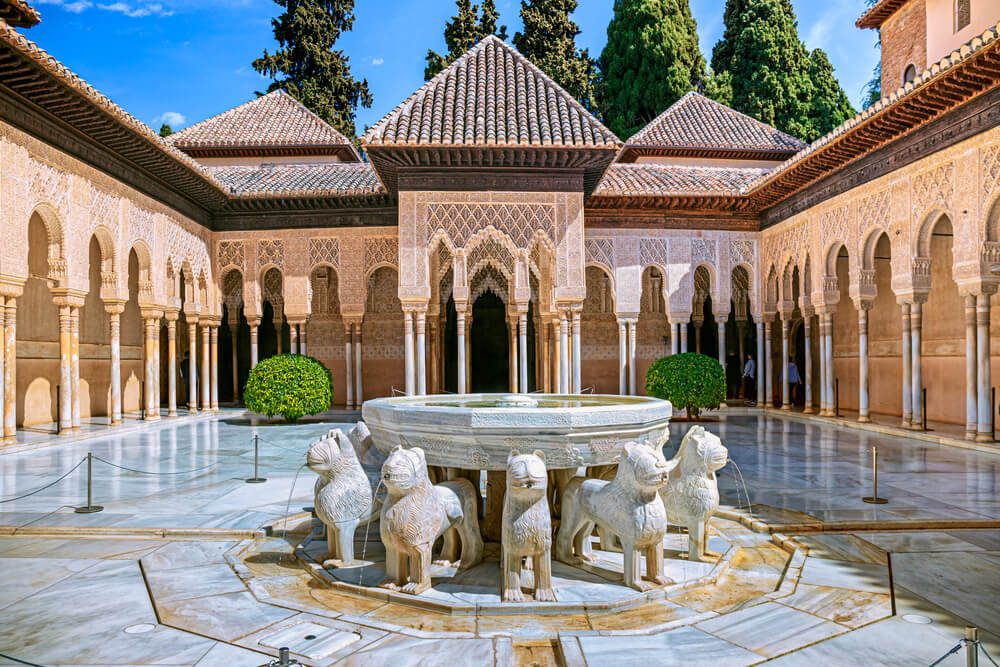
A marble courtyard ringed by 124 slender columns and centered on a fountain supported by twelve stone lions, built in the 14th century under Muhammad V. It remains the architectural centerpiece of the Nasrid Palaces.
Home to the Hall of the Ambassadors, this section features a wooden dome ceiling with over 8,000 interlocking pieces representing the seven heavens of Islamic cosmology. It served as the throne room for Nasrid sultans.
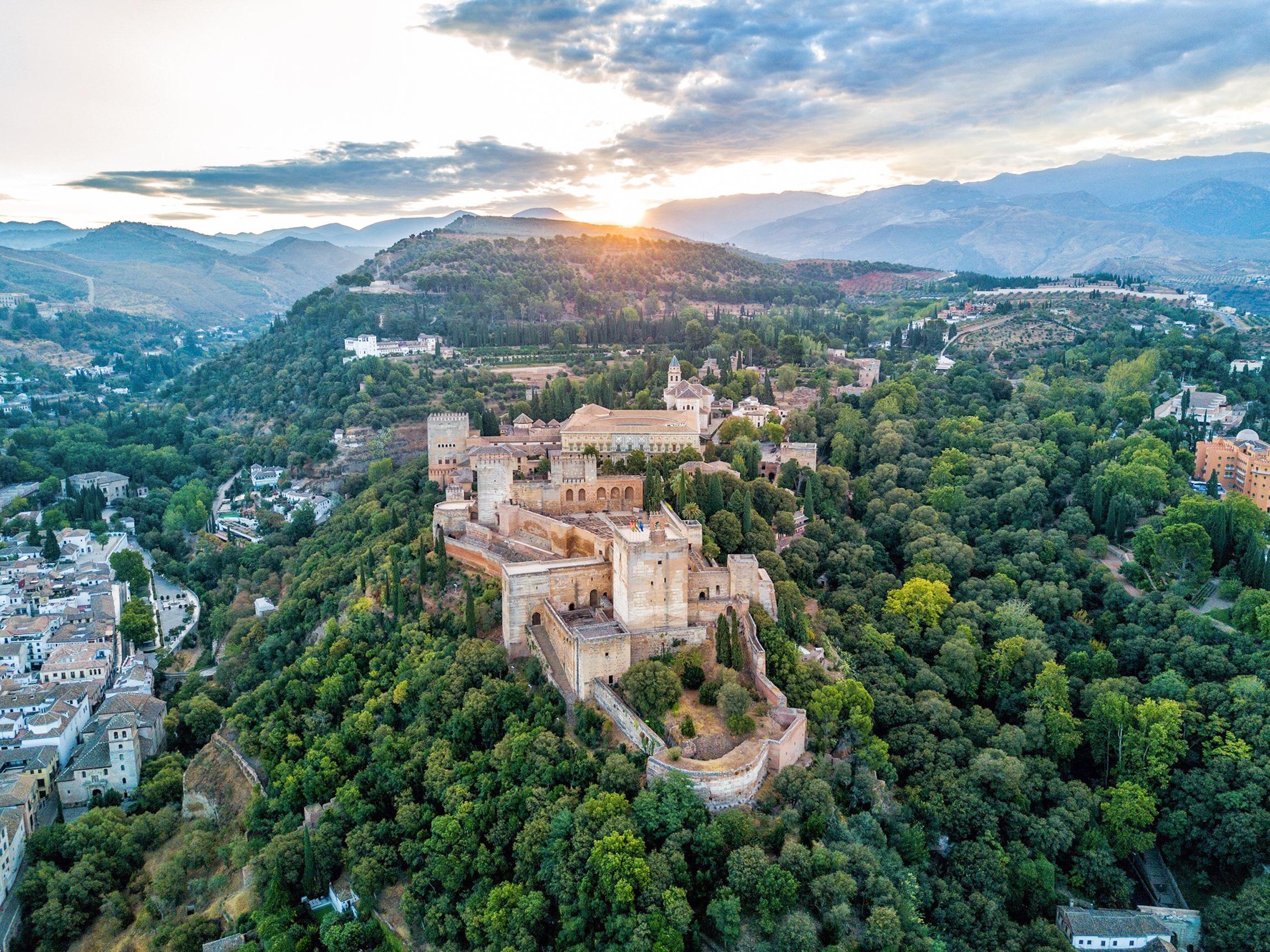
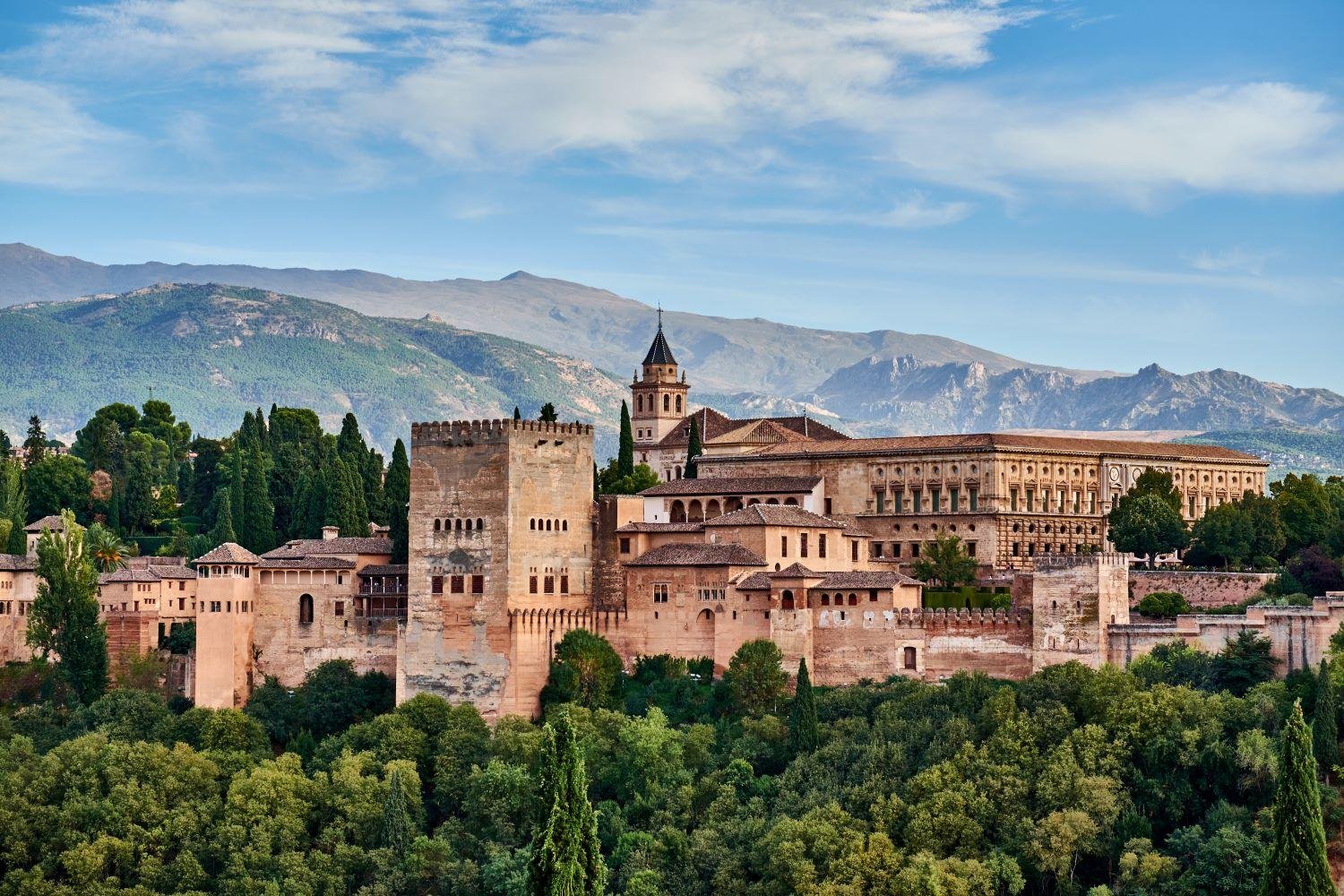
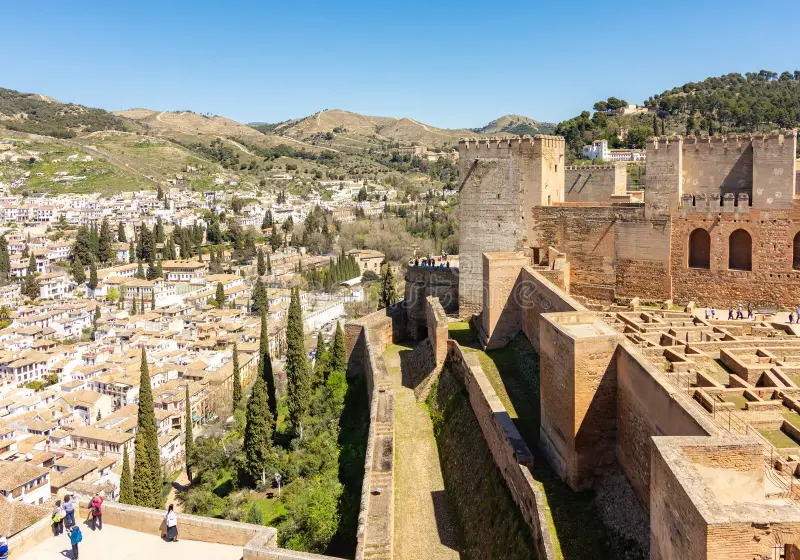
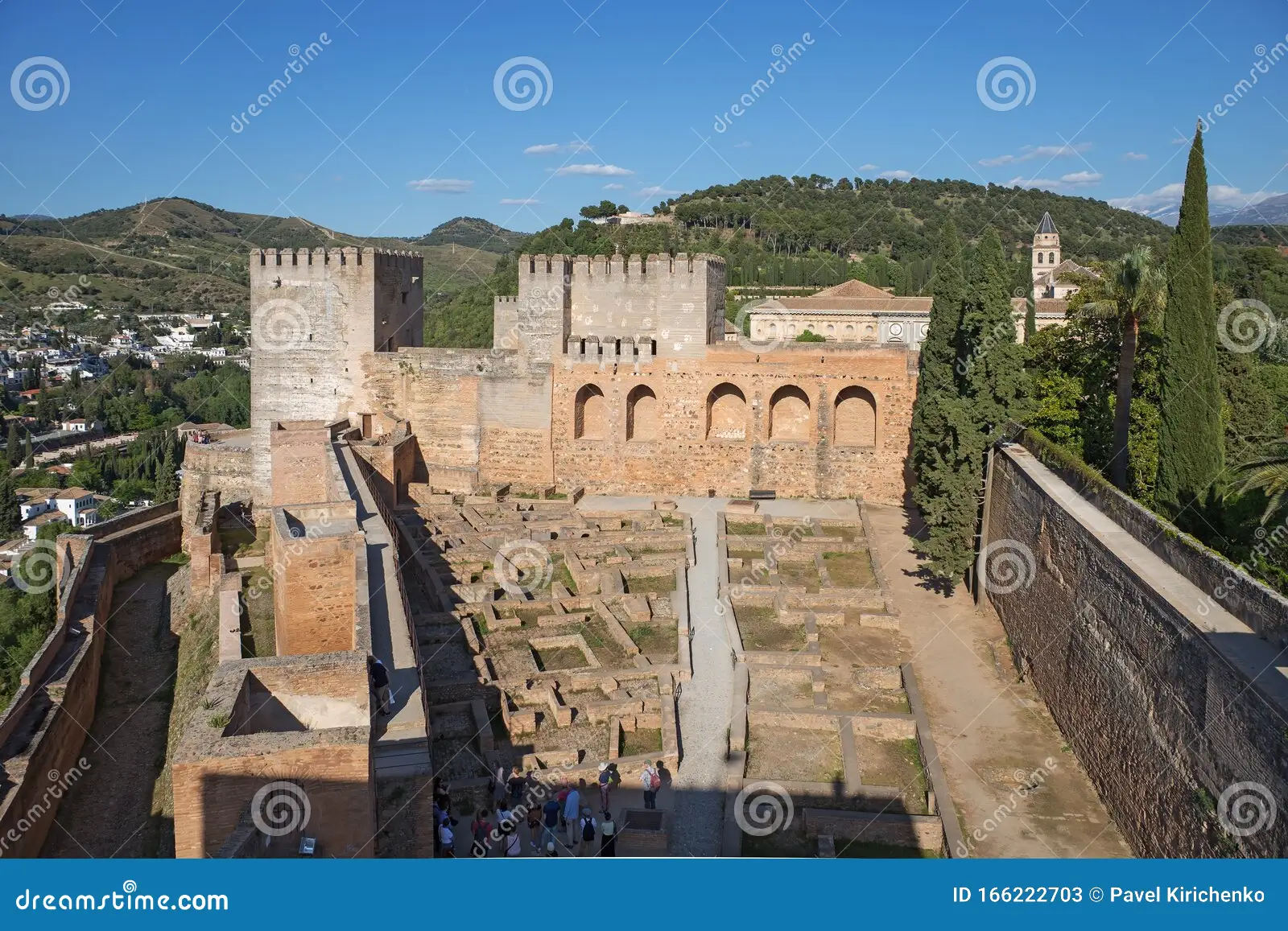
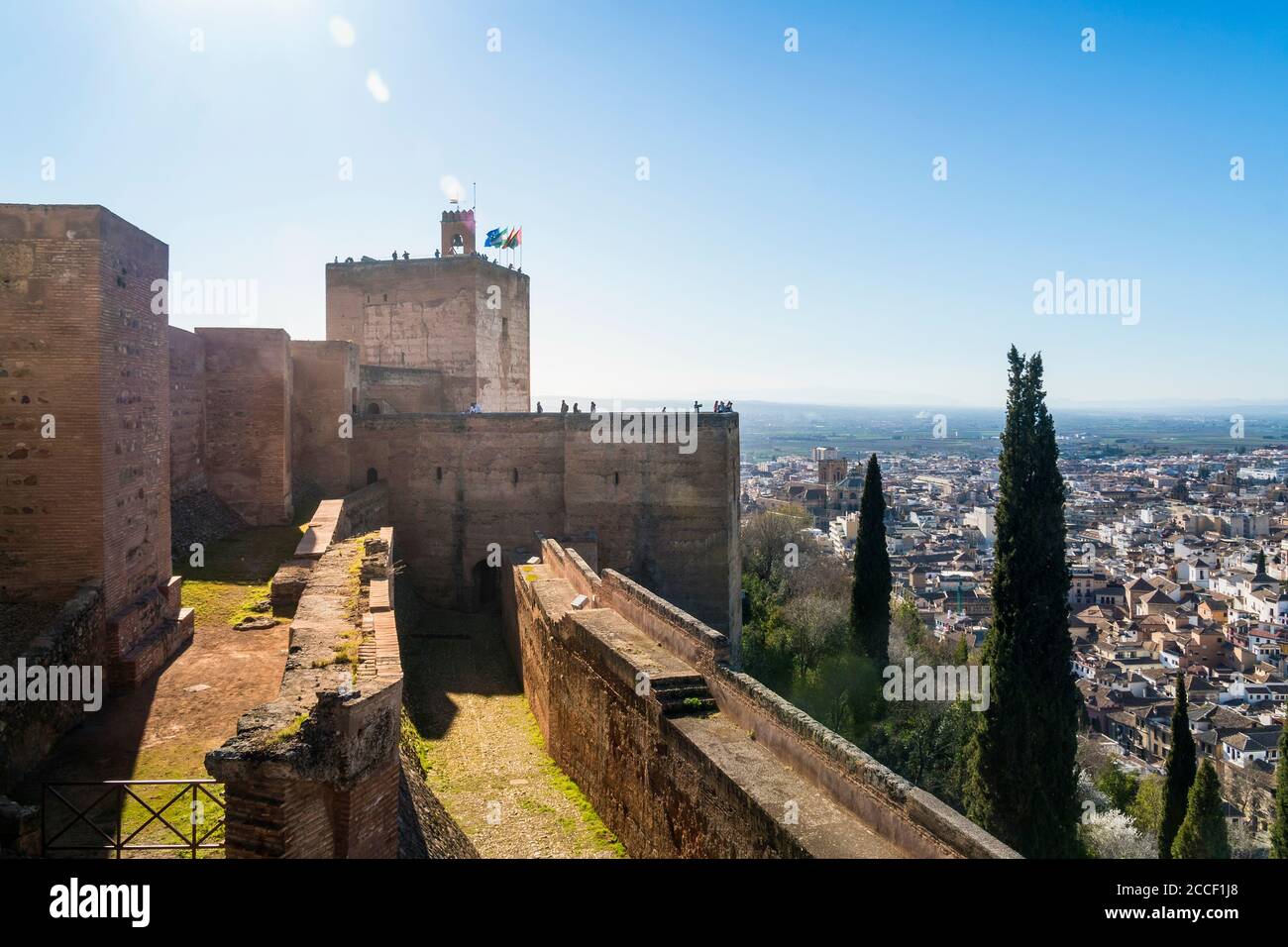
The oldest surviving section of the Alhambra, this military fortress predates the Nasrid Palaces and offers panoramic views from the Torre de la Vela watchtower. Its ramparts once housed a garrison of soldiers guarding the city.
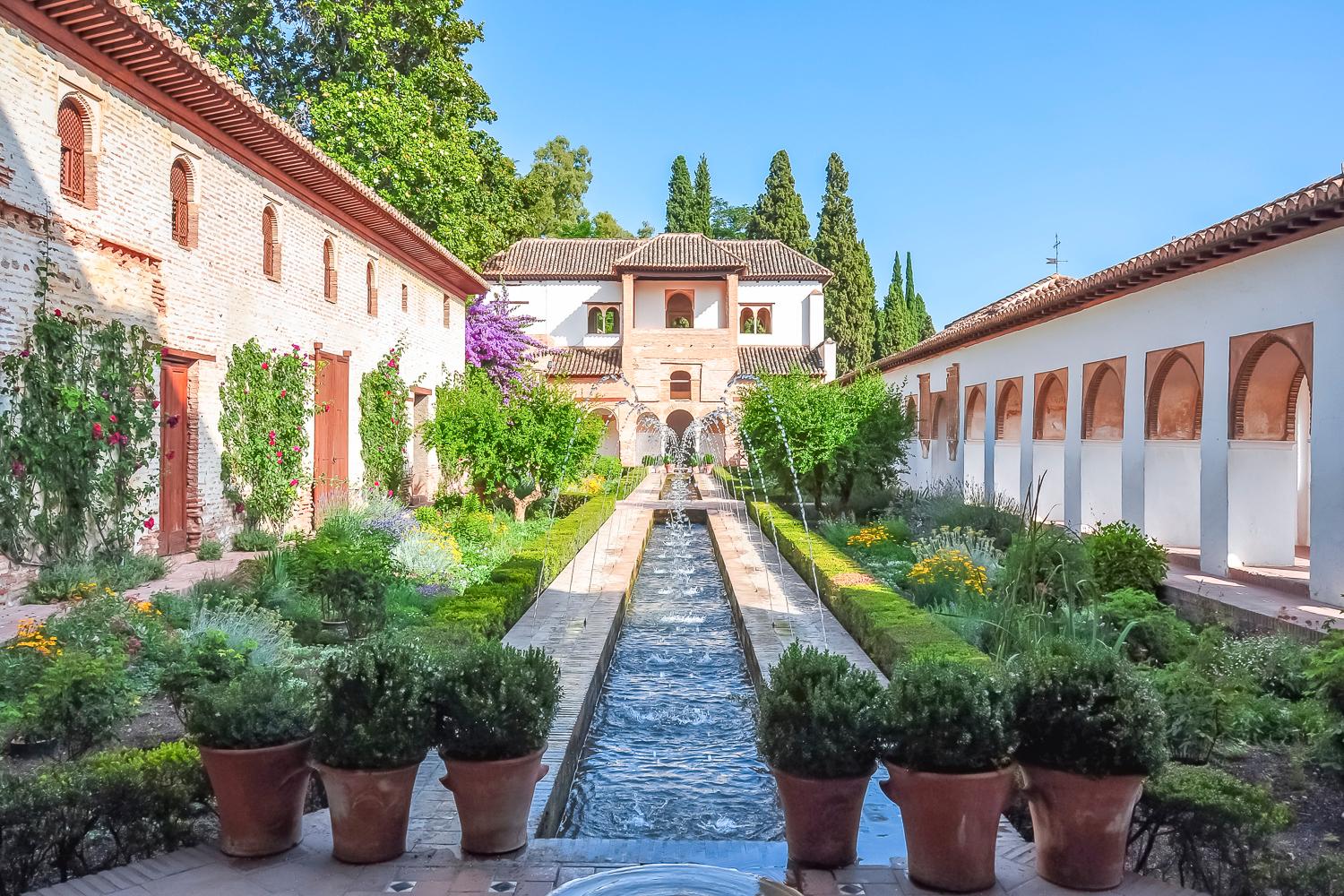
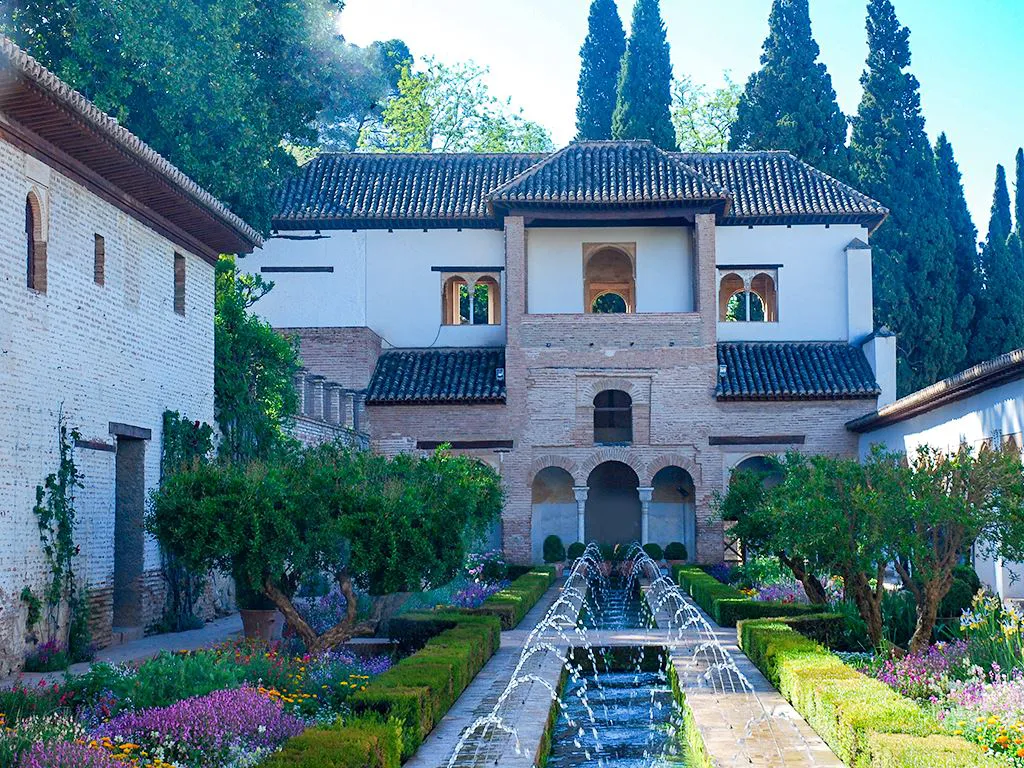
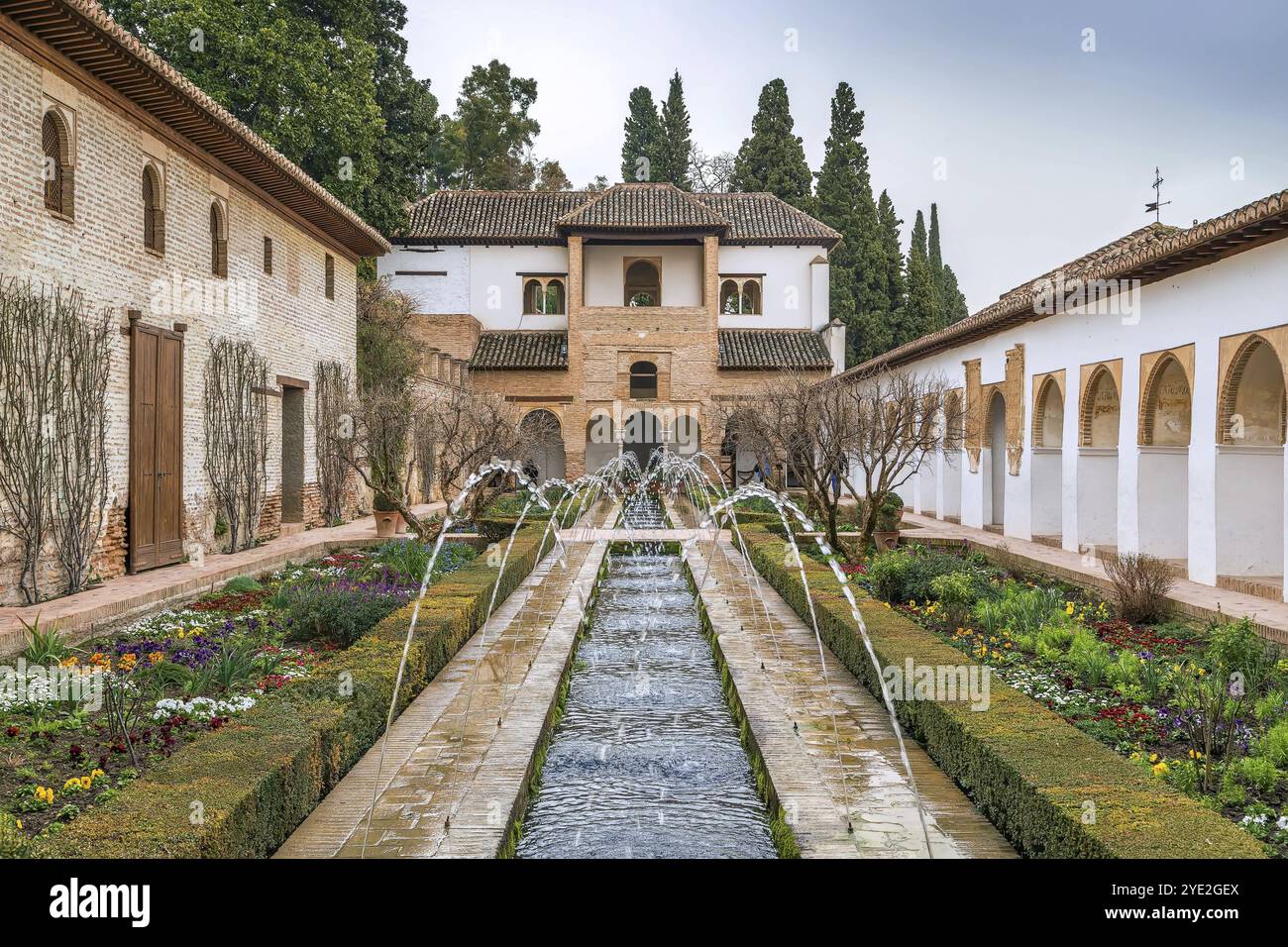
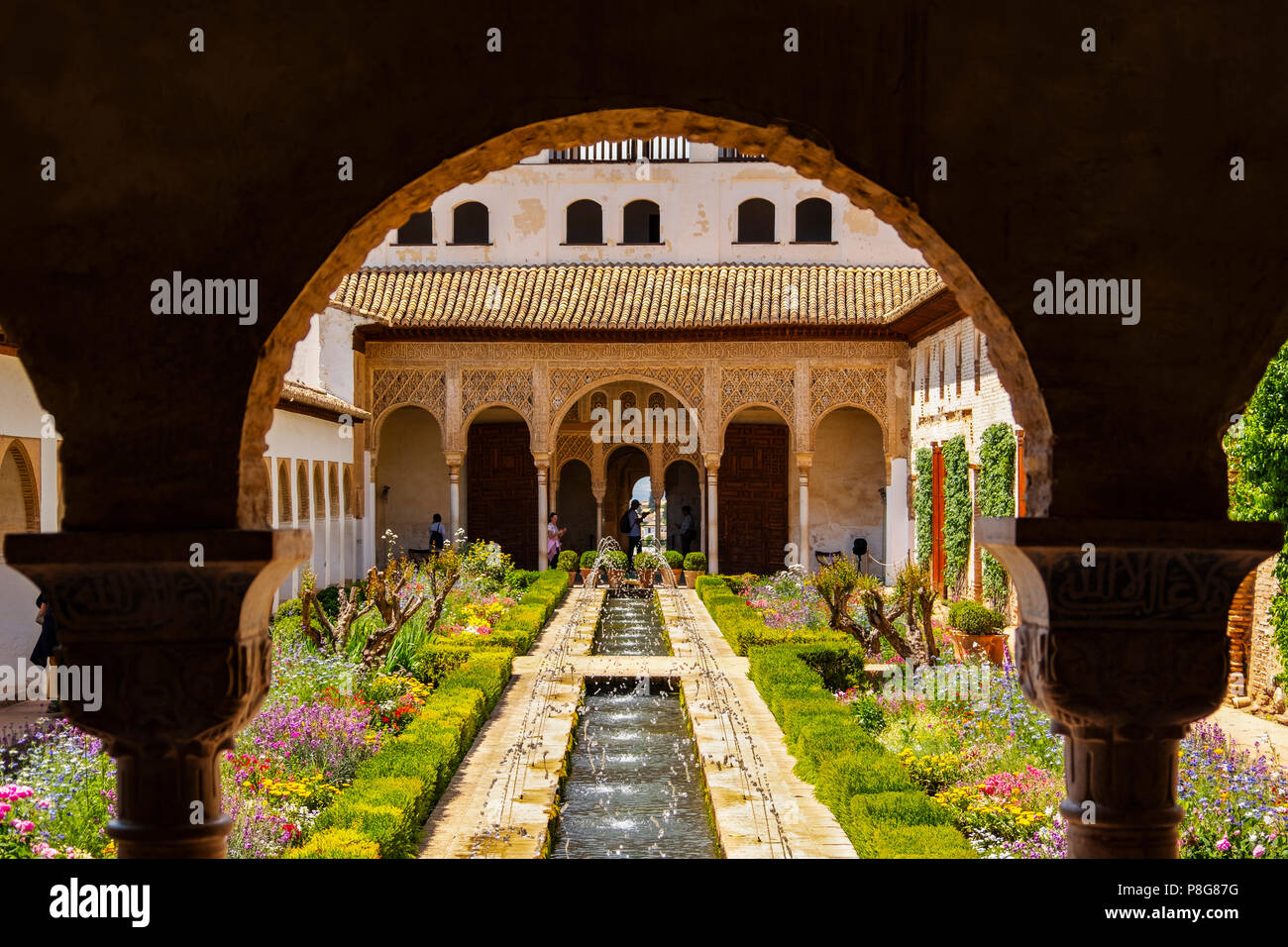
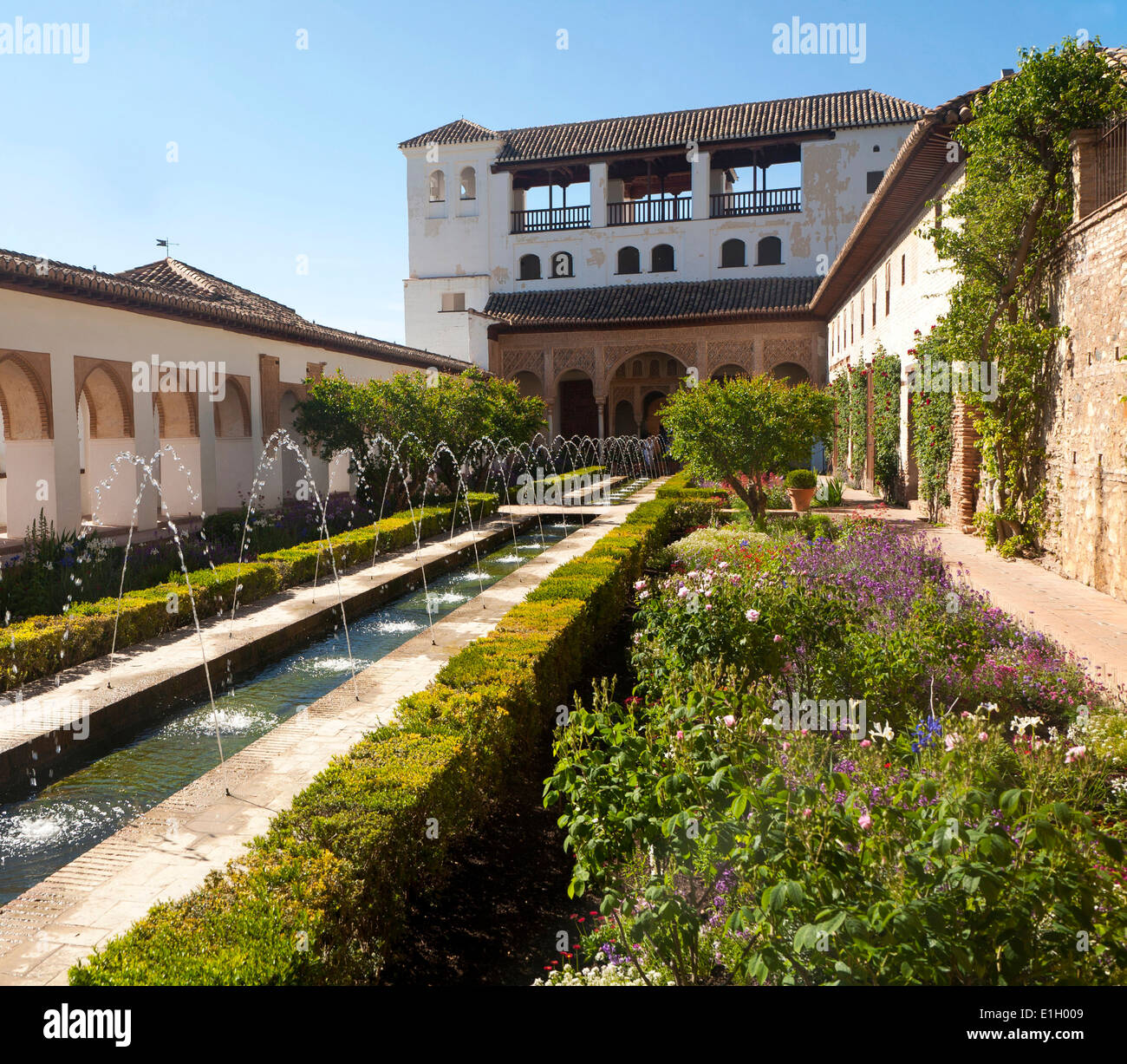
The former summer palace of the Nasrid emirs, its terraced gardens and the Patio de la Acequia water channel date to the early 14th century. The gardens were designed to provide a cooler retreat from the palace complex below.
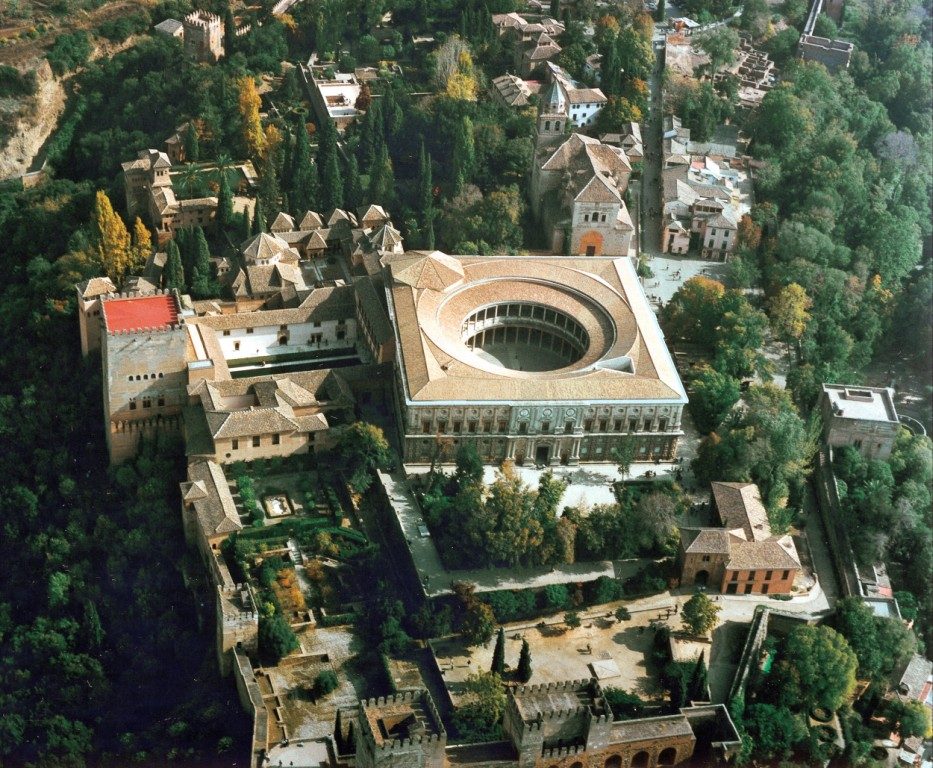
A circular Renaissance courtyard inserted into the site in 1527 by Emperor Charles V, contrasting sharply with the surrounding Islamic architecture. Its unusual circle-within-a-square design was unprecedented in Spanish architecture at the time.
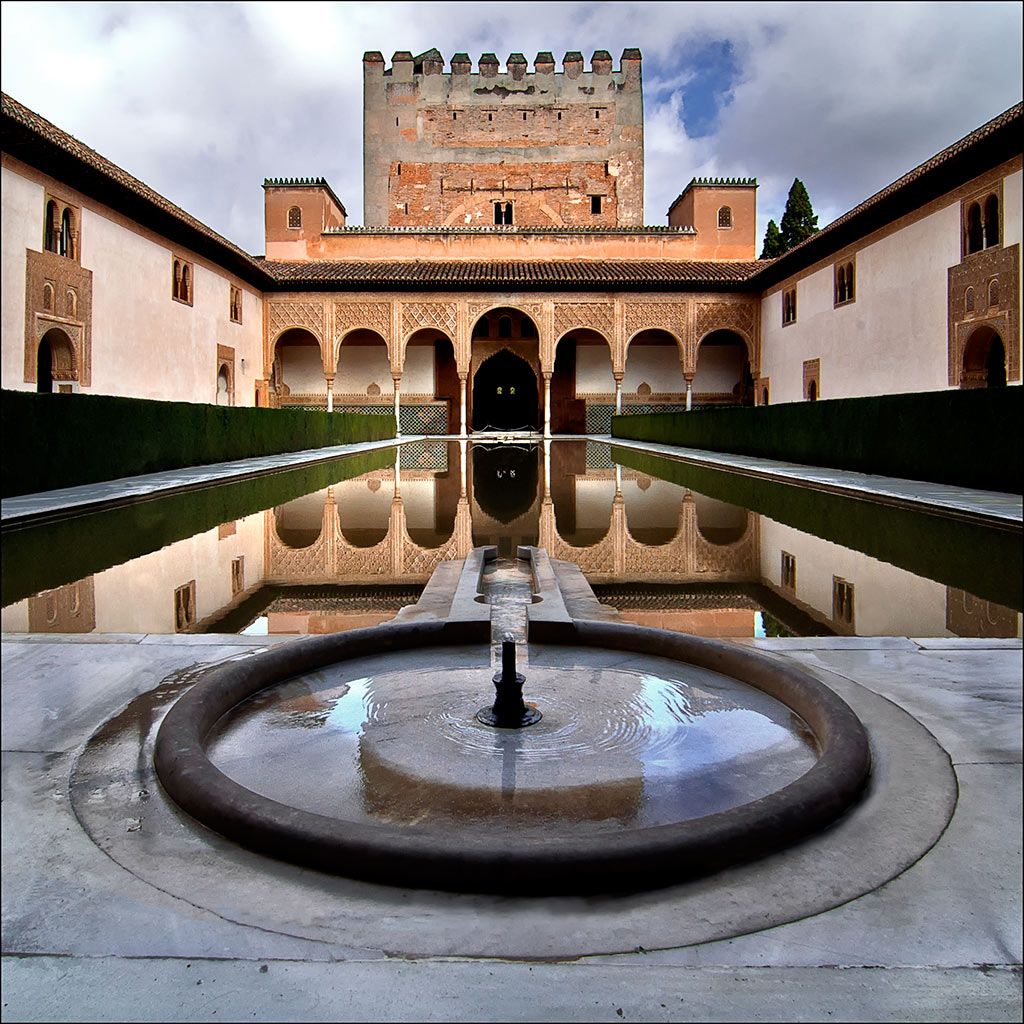
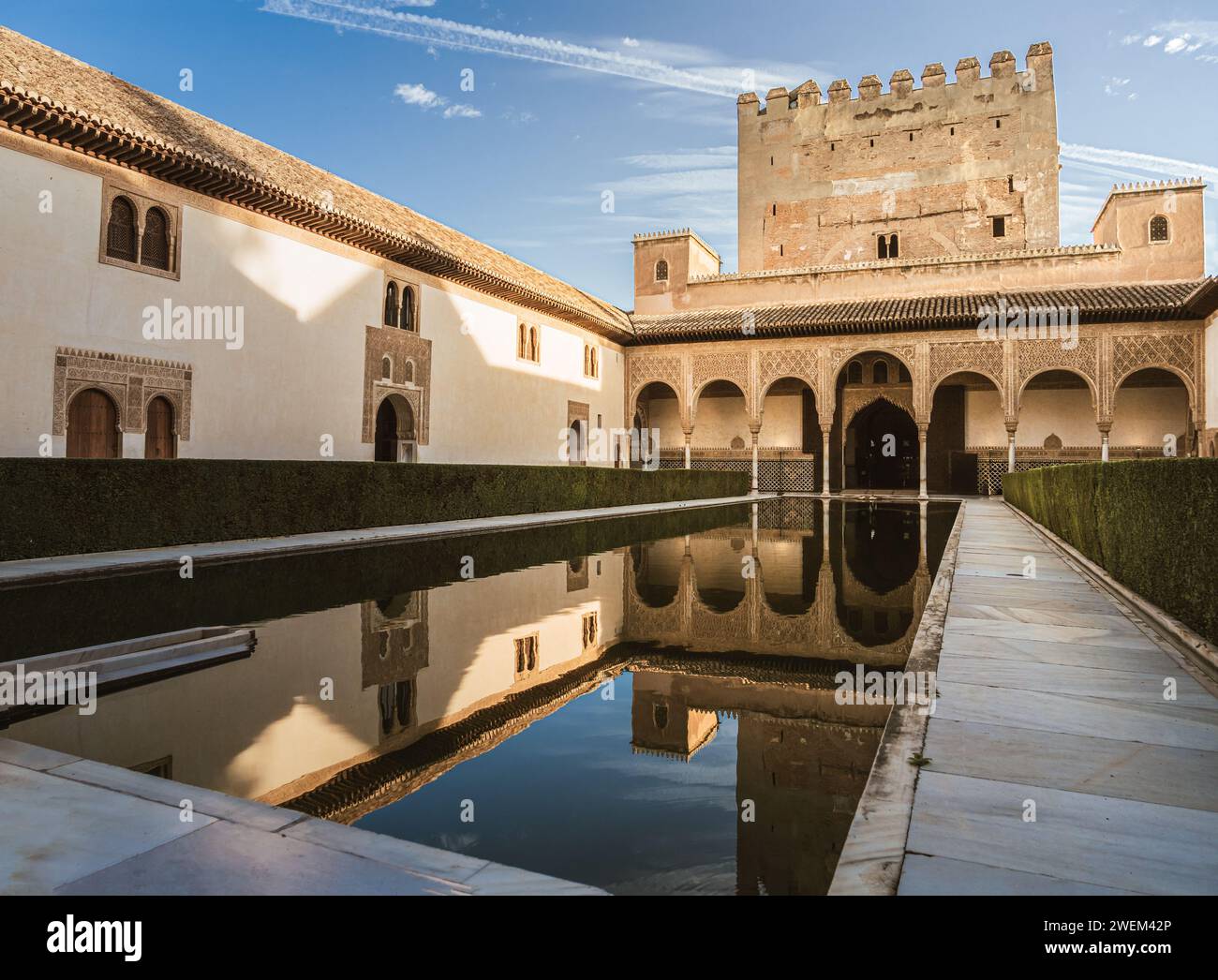
Known as the Court of the Myrtles, this long reflecting pool is bordered by myrtle hedges and leads toward the Comares Tower. Its still water creates a mirror image of the surrounding arcades.
You reach C/ Real de la Alhambra s/n while the hill is still cool, ideally in the 08:30–10:00 window, when the light comes in low and the ticket lanes are short. The Alhambra Palace Tickets you carry name a timed slot for the Nasrid Palaces; everything else in the day arranges itself around that half hour.
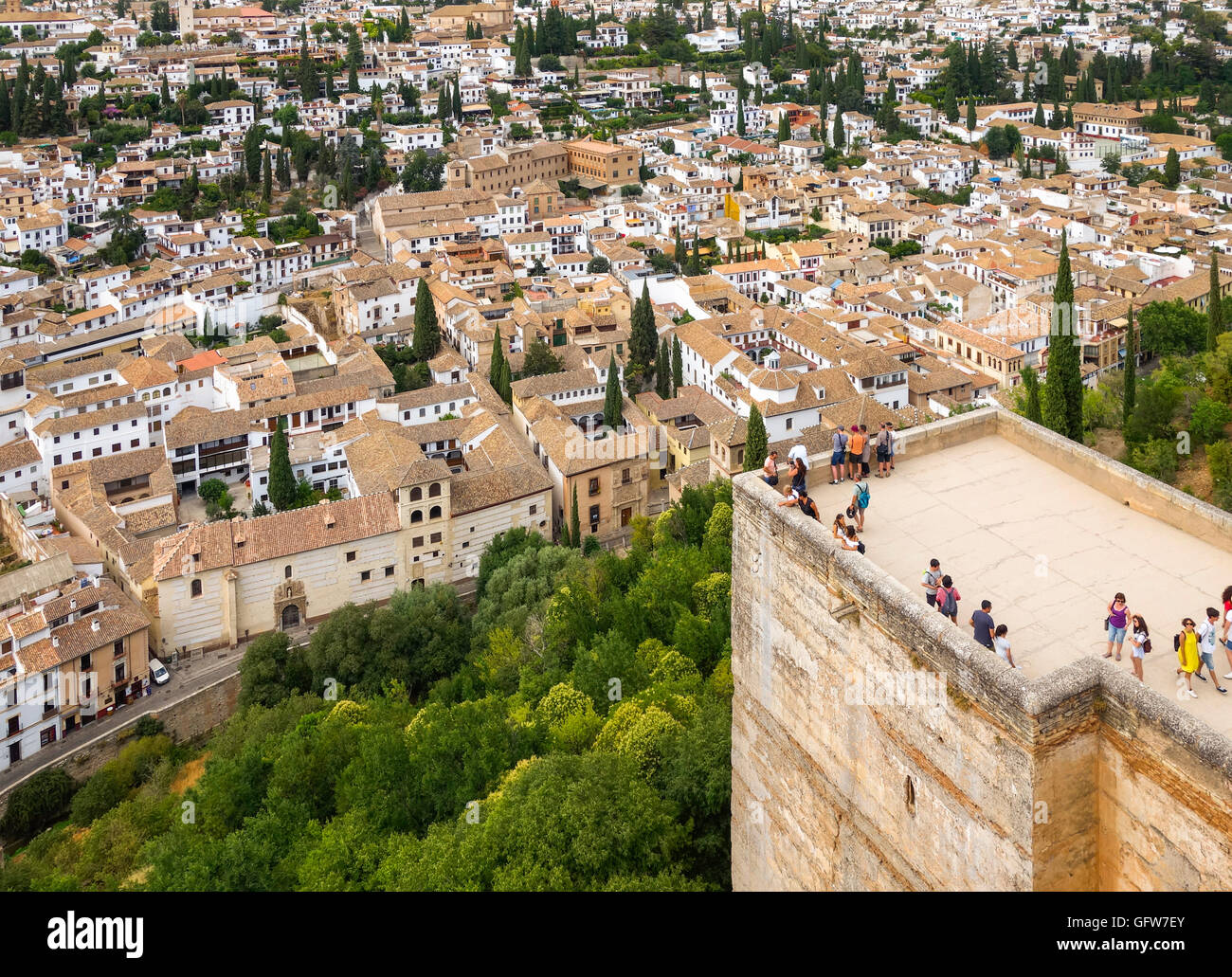
You start with the Alcazaba because the climb is easier before the heat. You take the ramp to the Torre de la Vela, put your hands on the parapet, and count the Sierra Nevada ridgelines against the Vega. Below, the Albaicín is a spill of white roofs and the Darro cuts a green line through them.
Then you turn inward. You pass beneath the Comares tower, cross the Court of the Myrtles, and the long pool holds the whole façade upside down at your feet. In the Hall of the Ambassadors you tilt your head back at the cedar dome and lose count of the stars. You slow at the Court of the Lions, where the twelve marble beasts still push water outward along four channels.
Afterwards you walk east to the Generalife. You climb the Water Stairway with your palm in the channel running along the handrail, and the sound follows you up. A Granada Alhambra tour ends here, in cypress shade, with the palaces below.
All the details about your upcoming adventure in one place
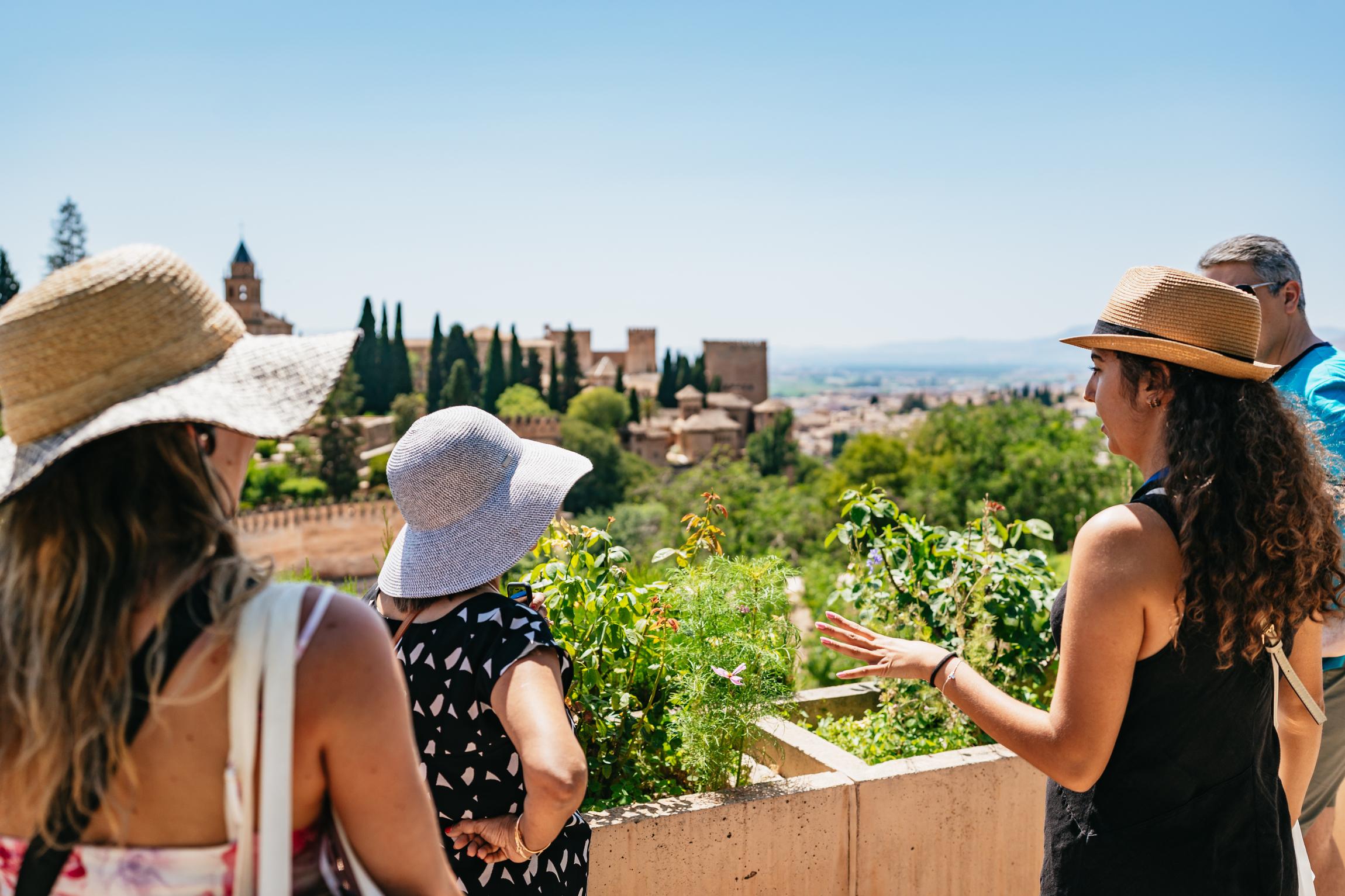
Set on the Sabika hill above Granada, this UNESCO World Heritage site brings together the Nasrid Palaces, the Generalife gardens and the fortress walls of the Alcazaba. Entradas a la Alhambra are timed and capacity-controlled, so an Alhambra Palace Tickets tour with a licensed guide gives you clear context on the muqarnas ceilings, the Court of the Lions and the Patio de los Arrayanes. Skip-the-line Alhambra access is paired with commentary that connects the complex to the wider story of Granada landmarks and Andalusian craftsmanship.
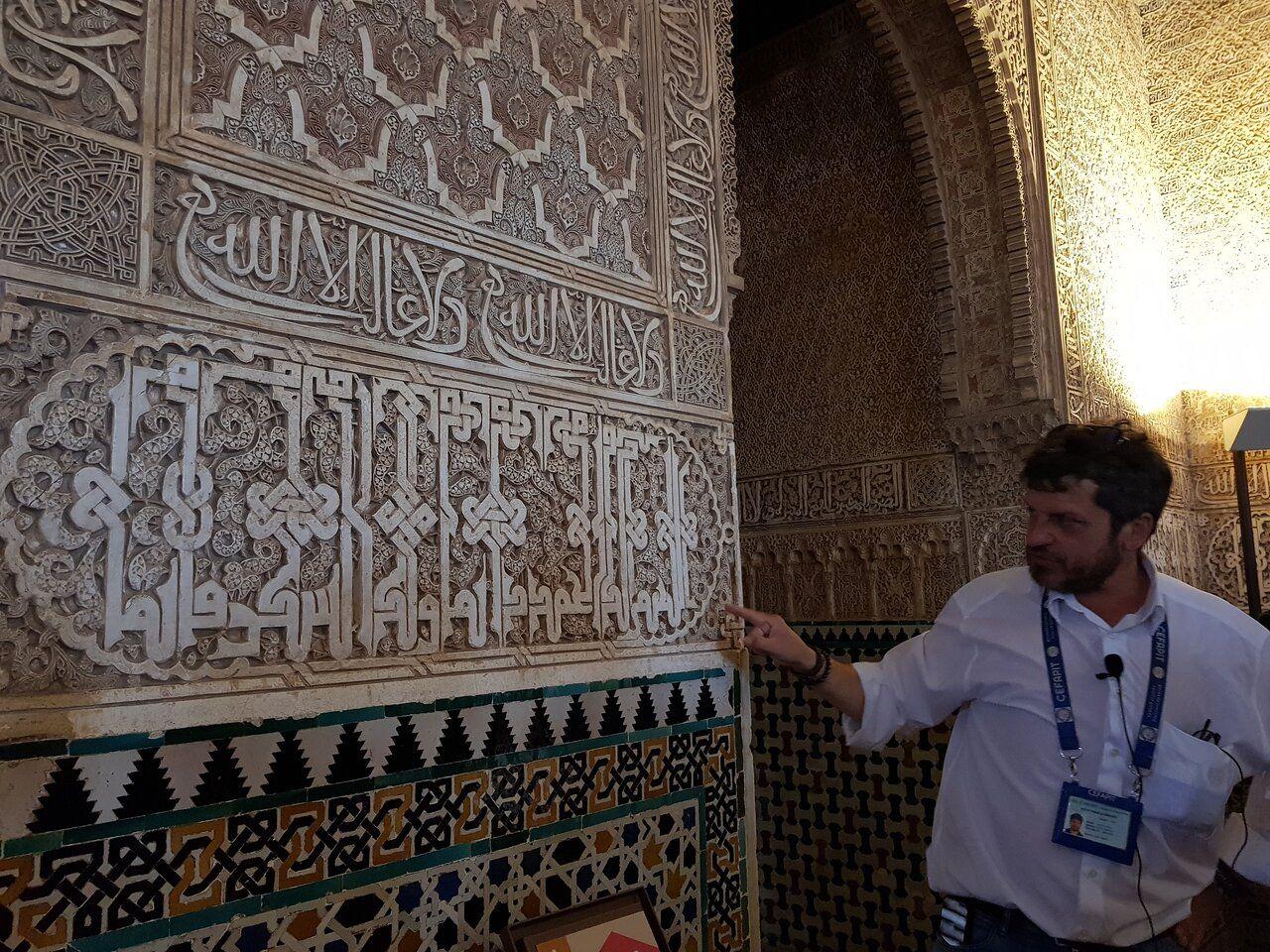
The Alhambra's most famous inscription repeats a single phrase thousands of times across its walls: "There is no victor but God." Carved into stucco, tile and wood, it is less decoration than argument.
Visitors holding Alhambra Palace Tickets walk through a building that talks to them in Kufic and cursive script from every surface.
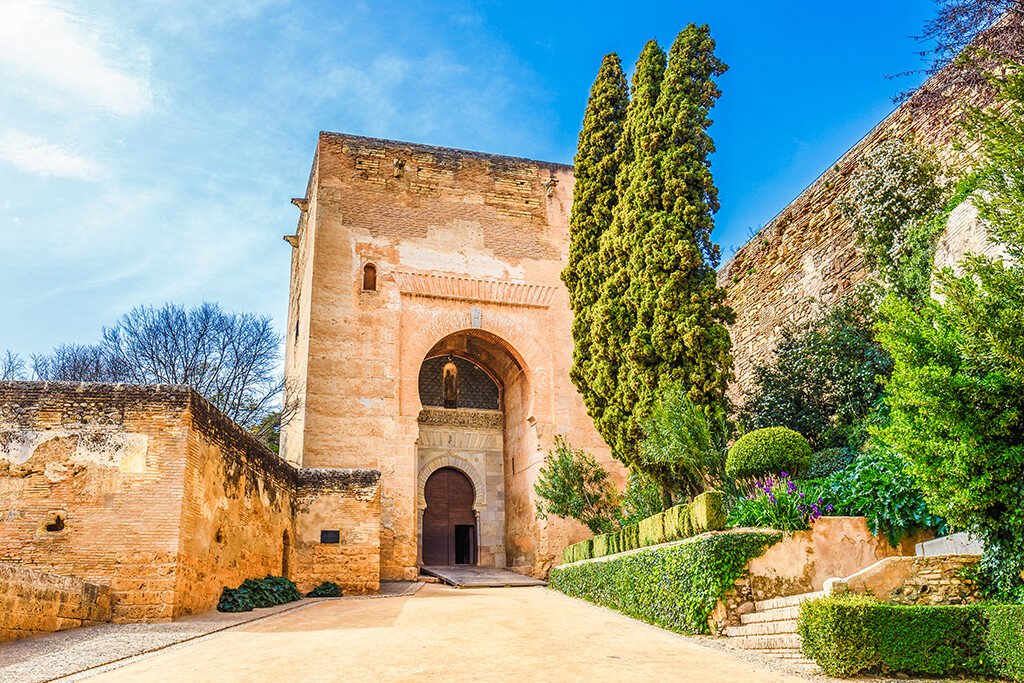
The complex rose on the Sabika hill above Granada under the Nasrid dynasty, the last Muslim rulers of the Iberian Peninsula, chiefly during the fourteenth century. Christian monarchs took the city in 1492 and adapted rather than erased it; Charles V later inserted a circular-courtyarded Renaissance palace into the Islamic fabric. Neglect followed, then rediscovery, and UNESCO inscribed the site as World Heritage in 1984.
What survives is not one building but a walled city. The Alcazaba is the military quarter, its Torre de la Vela commanding the Vega plain and the Sierra Nevada beyond. The Nasrid Palaces — Mexuar, Comares, Lions — form the ceremonial core, where the Court of the Lions rests on twelve marble beasts and a fountain fed by an engineered hydraulic system that still functions. Above and east lies the Generalife, the summer estate, whose Patio de la Acequia channels water down a long axial canal between clipped hedges.
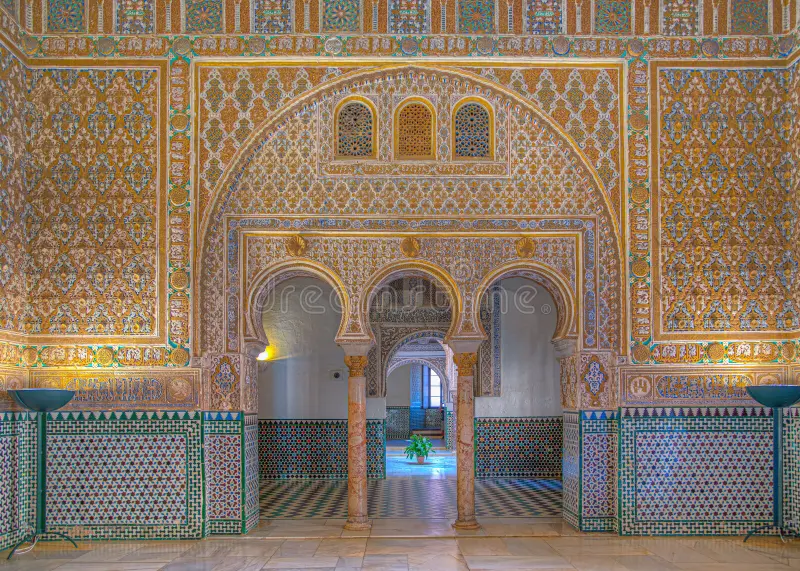
The architecture rewards slow looking. Muqarnas vaults in the Hall of the Two Sisters break the ceiling into thousands of prismatic cells, so light dissolves instead of falling. Azulejo tilework runs in geometric bands at eye height, giving way to carved plaster above and cedar ceilings higher still — a deliberate ascent from earth to heaven. The Comares façade, the Hall of the Ambassadors with its domed cosmos of interlaced stars, the Partal portico reflected in its still pool: each was built for a court that measured luxury in shade, water and calligraphy rather than in stone mass.
That is why the site matters now beyond its beauty. It is the most complete surviving palace-city of medieval Islamic Europe, and one of the few places where Andalusi craft can be read at full scale rather than in museum fragments. Conservation is constant; access to the Nasrid Palaces is timed to protect the fabric, which is why Alhambra Palace Tickets tickets carry a fixed half-hour entry slot printed on the voucher. General admission to the full complex is 22.27 EUR per adult, and the gates at C/ Real de la Alhambra s/n open at 08:30 daily.
Granada landmarks are many, from the Royal Chapel to the Albaicín's white lanes, but this hill remains the reason the city entered European imagination. Guided Alhambra Palace Tickets tours exist because the inscriptions, the hydraulics and the layered Nasrid and Renaissance chronology reveal far more with someone reading them aloud.

The Alhambra was built for a court that measured luxury in shade, water and calligraphy rather than in stone mass.
There is no formal dress code for Alhambra Palace Tickets visits, but comfortable walking shoes are essential given the uneven cobblestones and gravel paths across the Alcazaba, Nasrid Palaces, and Generalife gardens. In summer, light breathable clothing and a hat are recommended since much of the complex, including the gardens, offers little shade during midday hours.
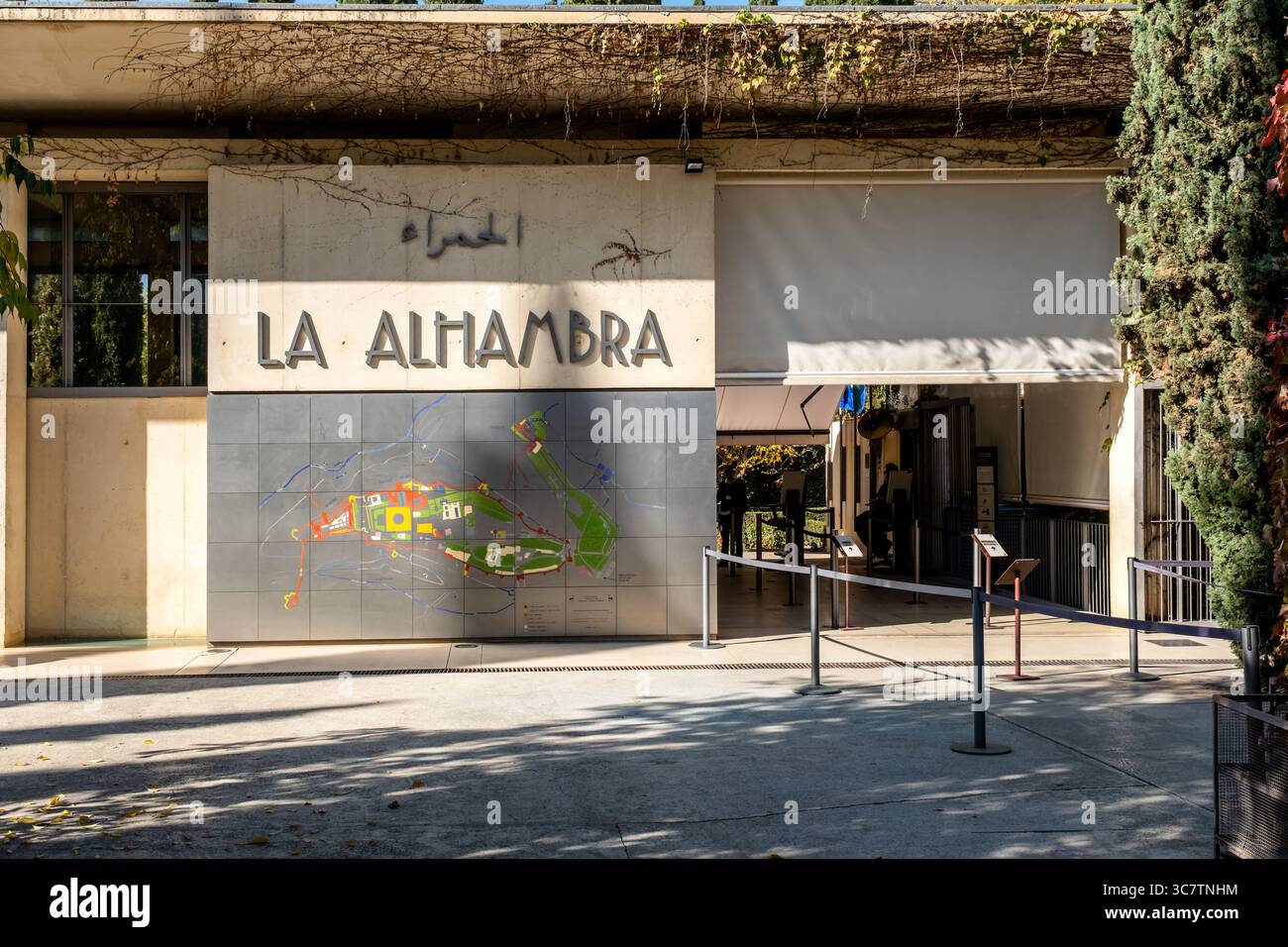
Airport-style security screening with bag checks and metal detectors operates at the main entrances near the Puerta de la Justicia and Pabellón de Acceso. Backpacks and handbags are permitted, but large suitcases, wheeled luggage, and oversized bags are not allowed inside and have no on-site storage option.
Personal photography and video are permitted throughout the Alcazaba, Generalife gardens, and most of the Nasrid Palaces, including the Court of the Lions and Comares Palace. Tripods, monopods, selfie sticks, and drones require prior authorization from the Patronato de la Alhambra y Generalife and are otherwise prohibited.
Children under 12 receive free entry to the Alhambra General day tour, and strollers are usable on most paved sections but not inside the Nasrid Palaces' narrower rooms. Baby carriers are a practical alternative to strollers for the palace interiors.
The Alhambra offers an adapted route with ramps covering the Alcazaba, Palacio de Carlos V, and most of the Nasrid Palaces, though some original Nasrid-era thresholds and narrow doorways remain difficult for wheelchairs. Wheelchairs can be reserved in advance through the ticket office, and visitors with reduced mobility should call +34 958 027 971 ahead of their visit to confirm current route access.
Eating and drinking are not permitted inside the Nasrid Palaces or the Alcazaba's enclosed rooms, though water is allowed throughout the grounds given the summer heat. There are cafés and kiosks near the Generalife entrance and the Parador de Granada within the complex for meals between palace visits.
Nasrid Palaces slot required
Moderate crowds early week
Busier ahead of weekend
Heaviest daytime crowds
Families common on Sundays
Hours
Daily 08:30–20:00, general Monumental Complex tour
Address
C/ Real de la Alhambra s/n, 18009 Granada, Spain
Access
Partial step-free routes; some cobbled paths and stairs in Nasrid Palaces
Best arrival
08:30–10:00 for cooler temperatures and thinner crowds
Bag policy
Small daypacks allowed; large suitcases and bulky bags restricted at entry
Public transport · 20 minutes · Around 1.40 EUR per ride
Take bus C30 or C32 from Plaza Nueva or Plaza Isabel la Católica directly to the Alhambra entrance.
Car · 10-15 minutes from city center · Parking fees apply hourly
Drive up C/ Real de la Alhambra and use the Alhambra's paid parking near the Pabellón de Acceso, as street parking is very limited.
Walk · 25-30 minutes · Free
Climb the Cuesta de Gomérez from Plaza Nueva through wooded paths up to the Puerta de la Justicia.
Taxi · 10-15 minutes · Metered fare, typically 8-12 EUR
Taxis run directly from central Granada to the Alhambra's access pavilion, useful in summer heat.
Official Alhambra Palace tickets, priced at 22.27 EUR for the General day tour of the full complex, are tied to a fixed date and Nasrid Palaces entry slot and generally cannot be changed or refunded once purchased. Some third-party Alhambra Palace Tickets tours booked through resellers allow free cancellation up to 24 hours before the visit, so it is worth checking the specific operator's terms at checkout.
Recommended time
3-4 hours
Budget roughly 3 to 4 hours to cover the Alcazaba, Nasrid Palaces and Generalife at an unhurried pace when booking Alhambra Palace Tickets, with 45-60 minutes for the Alcazaba's ramparts and Torre de la Vela, 1 to 1.5 hours inside the Nasrid Palaces, and about an hour wandering the Generalife's terraced gardens. Your ticket's fixed Nasrid Palaces slot is the anchor for the whole day: arrive at the complex at least an hour before that window, since staff enforce it strictly and late arrivals are turned away. Add 30-45 minutes if you want to also see the Palacio de Carlos V and Alhambra Museum, or trim toward 2.5 hours if the palaces are your main priority. Whatever the sequence, expect a short queue at the palace gate itself even with timed entry, since 300 people are released every half hour.
Crowd levels through the day
Weather · crowds · average price — dots go green to amber to red as each metric rises.
March through May brings mild temperatures around 15-22°C and blooming Generalife gardens, though Semana Santa week draws heavy crowds.
June through August sees temperatures above 35°C by midday, so Alhambra Palace Tickets holders should favor early morning or evening slots to avoid peak heat.
September and October offer cooler weather near 20-25°C with thinner crowds than summer, making it a favorable season for Alhambra Palace Tickets tours.
December through February stays cool at 5-15°C with the lightest crowds of the year, aside from the Christmas holiday period.
Alhambra Palace Tickets for the Nasrid Palaces sell out weeks ahead in summer, so reserve as soon as dates are released.
Tickets are issued in the visitor's name and passports or national IDs are checked at entry, so bring the exact document used when booking.
Mobile signal can be weak near the entrance pavilion, so save the ticket QR code as a photo before arriving.
Paths inside the Alcazaba and Generalife include uneven cobblestones and gravel, making flat closed-toe shoes far more practical than sandals.
The main ticket counter opens earlier than the general 08:30 gate time, useful for last-minute purchases when available.
Many visitors pair their Alhambra Palace Tickets tour with a walk through the adjoining Albaicín quarter on the same day.
This broader ticket adds access to Andalusian monuments like the Corral del Carbón beyond the standard general admission.
C/ Real de la Alhambra s/n, 18009 Granada
Main pedestrian entrance near the Alcazaba side
Get directions
Access pavilion, Alhambra grounds
Ticket collection point for advance bookings
Get directionsCuesta de los Chinos side
Secondary entrance closer to Generalife gardens
Get directionsThe hill called Sabika carried fortifications long before the Nasrids. In 1238 Muhammad I ibn al-Ahmar, founder of the Nasrid dynasty, entered Granada and chose the ridge for his citadel. He rebuilt the Alcazaba on Zirid foundations and diverted the River Darro through the Acequia Real, the royal canal that made gardens possible on dry rock. Water dictated everything that followed. Visitors who reserve Alhambra Palace Tickets today walk a hydraulic system engineered in the thirteenth century. The palaces came later, under two rulers. Yusuf I, who reigned from 1333 to 1354, raised the Comares Palace and the Gate of Justice, dated 1348 by its inscription. His son Muhammad V completed the Palace of the Lions around 1362 to 1391, with its alabaster fountain and muqarnas vaulting. Craftsmen carved Kufic and cursive Arabic into the stucco, repeating the dynastic motto: wa-la ghaliba illa Allah, there is no victor but God. Granada landmarks rarely record their own politics so plainly. Nasrid Granada survived as a tributary state, and the ornament was partly a claim to legitimacy. On 2 January 1492 Muhammad XII, called Boabdil, surrendered the keys to Ferdinand and Isabella. The Catholic Monarchs preserved the complex rather than razing it. In 1527 Charles V began a Renaissance palace beside the Nasrid rooms, designed by Pedro Machuca, a circular courtyard set inside a square block; it stood roofless until 1957. Napoleonic troops occupied the site and, retreating in 1812, mined the towers. A soldier named José García reportedly cut the fuses, saving most of the Alcazaba. Decay continued until Washington Irving's Tales of the Alhambra, published in 1832, drew European attention, and Spain declared the site a national monument in 1870. Restoration under Leopoldo Torres Balbás from 1923 to 1936 replaced romantic invention with archaeological method. UNESCO inscribed the Alhambra and Generalife in 1984. Guided Alhambra Palace Tickets tours now trace that layered chronology, and skip-the-line Alhambra access remains capped to protect the plasterwork. Purchasing Alhambra Palace Tickets tickets is, in effect, joining a conservation programme; a single Alhambra Palace Tickets tour covers eight centuries of continuous occupation.
Muhammad I ibn al-Ahmar founds the Nasrid dynasty in Granada and begins rebuilding the Alcazaba on the Sabika hill.
Yusuf I builds the Comares Palace and the Gate of Justice, whose inscription is dated 1348.
Muhammad V completes the Palace of the Lions, including the alabaster fountain and muqarnas vaults.
Muhammad XII surrenders Granada to Ferdinand and Isabella on 2 January, ending Nasrid rule.
Charles V commissions Pedro Machuca to build a Renaissance palace beside the Nasrid quarters.
Retreating Napoleonic troops mine the towers; most of the Alcazaba survives after the fuses are cut.
Spain declares the Alhambra a national monument following renewed European interest.
UNESCO inscribes the Alhambra and Generalife on the World Heritage List.
Inside the Nasrid Palaces, this marble courtyard framed by 124 slender columns and the central lion fountain is the most photographed interior in the Alhambra. Stand at the arcade entrance for a symmetrical shot down the colonnade toward the fountain, and note that flash and tripods are restricted in this section. Booking Alhambra Palace Tickets with a timed Nasrid Palaces slot is the only way to reach this courtyard.
Also called the Court of the Myrtles, this long reflecting pool inside the Comares Palace mirrors the Torre de Comares in still water, giving a near-perfect symmetrical reflection shot. Shoot from either short end of the pool at ground level to capture the tower's reflection lengthwise. Crowds thin noticeably right after the Nasrid Palaces entry slot opens.
The tallest tower of the Alcazaba fortress offers a 360-degree panoramic viewpoint over the Albaicín rooftops, the Sierra Nevada peaks, and the Alhambra's own palace complex below. Climb the narrow interior stairs to the open-air top platform, which has waist-high stone parapets and limited space at peak hours. Clear days give the widest visibility toward the mountains.
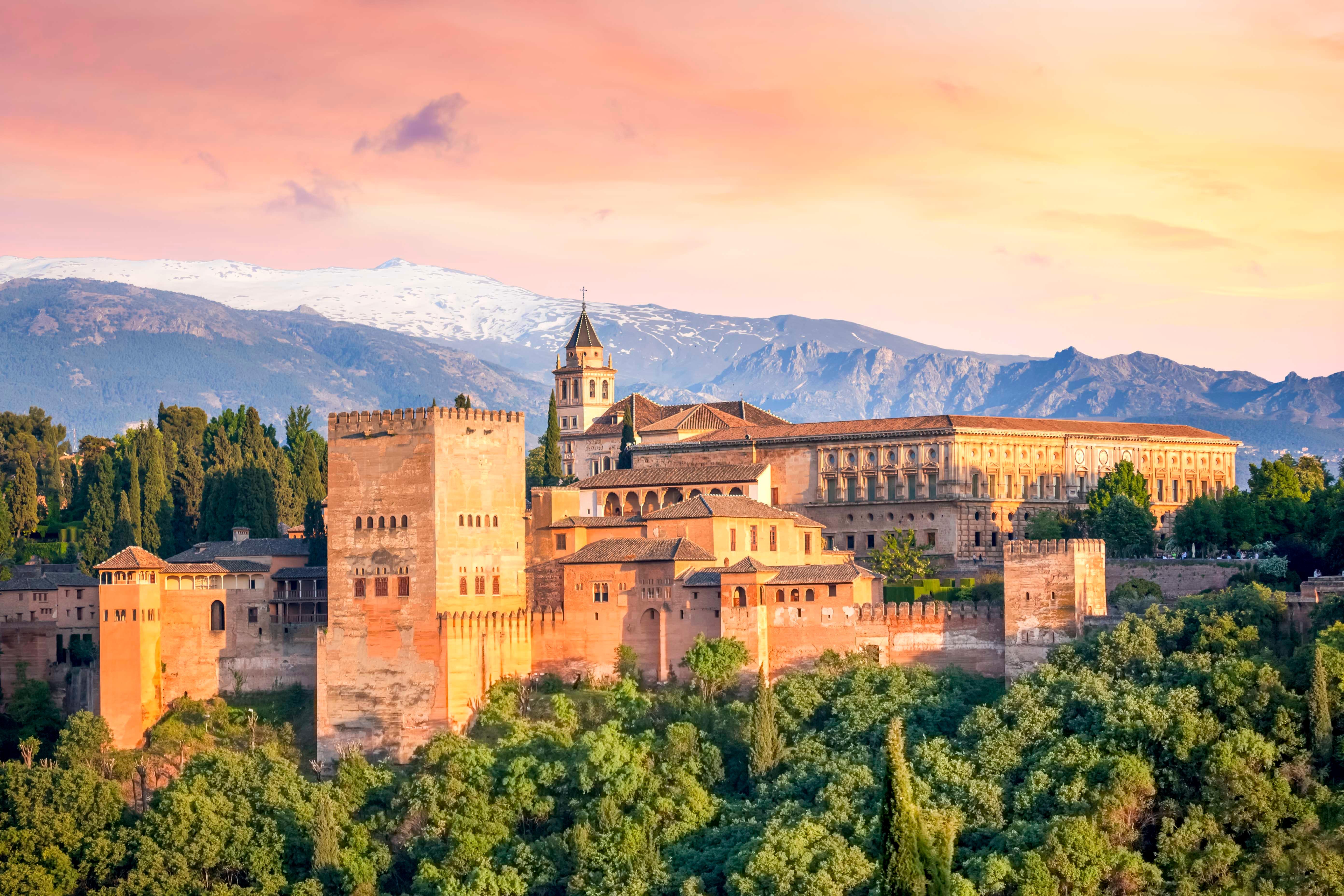
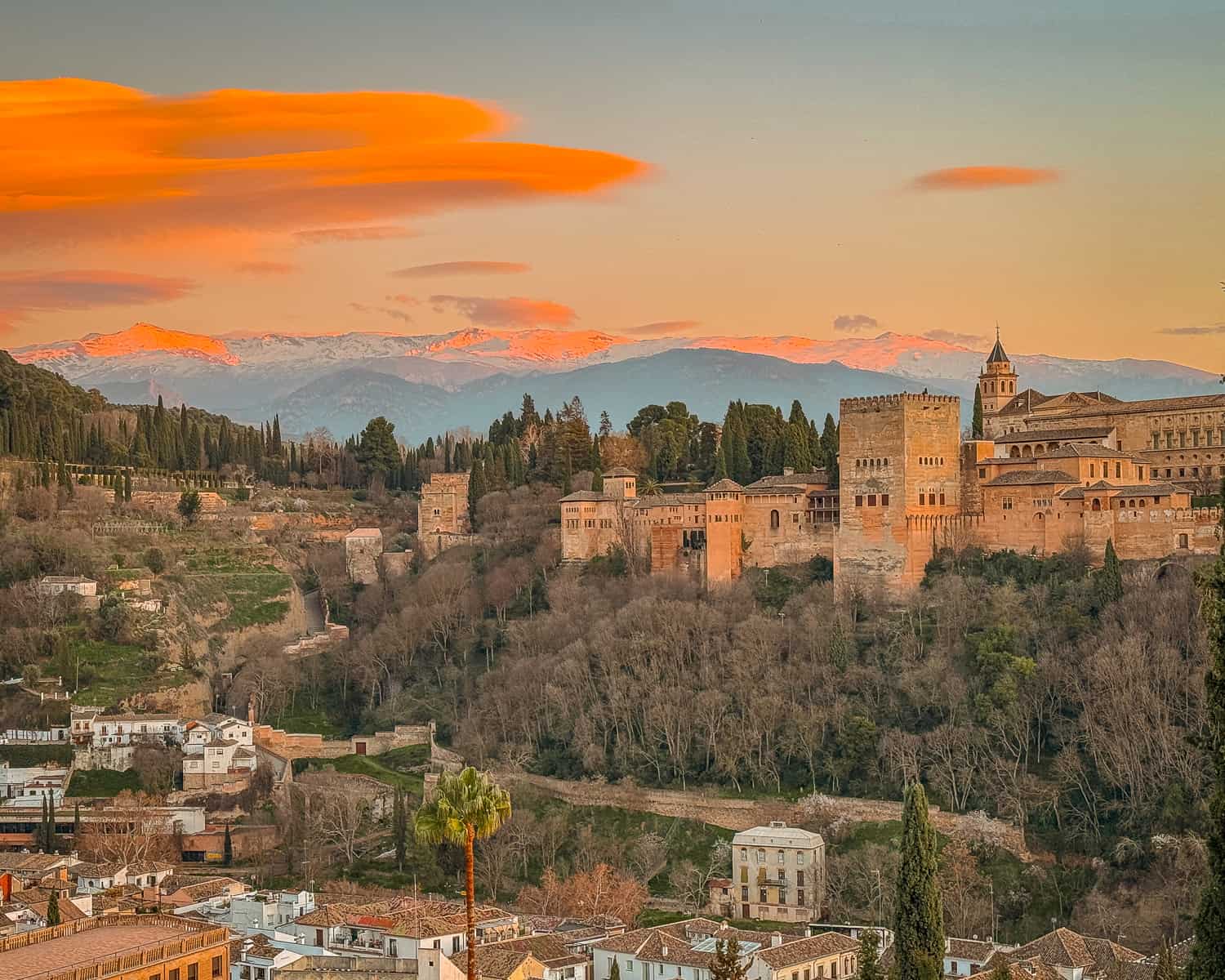
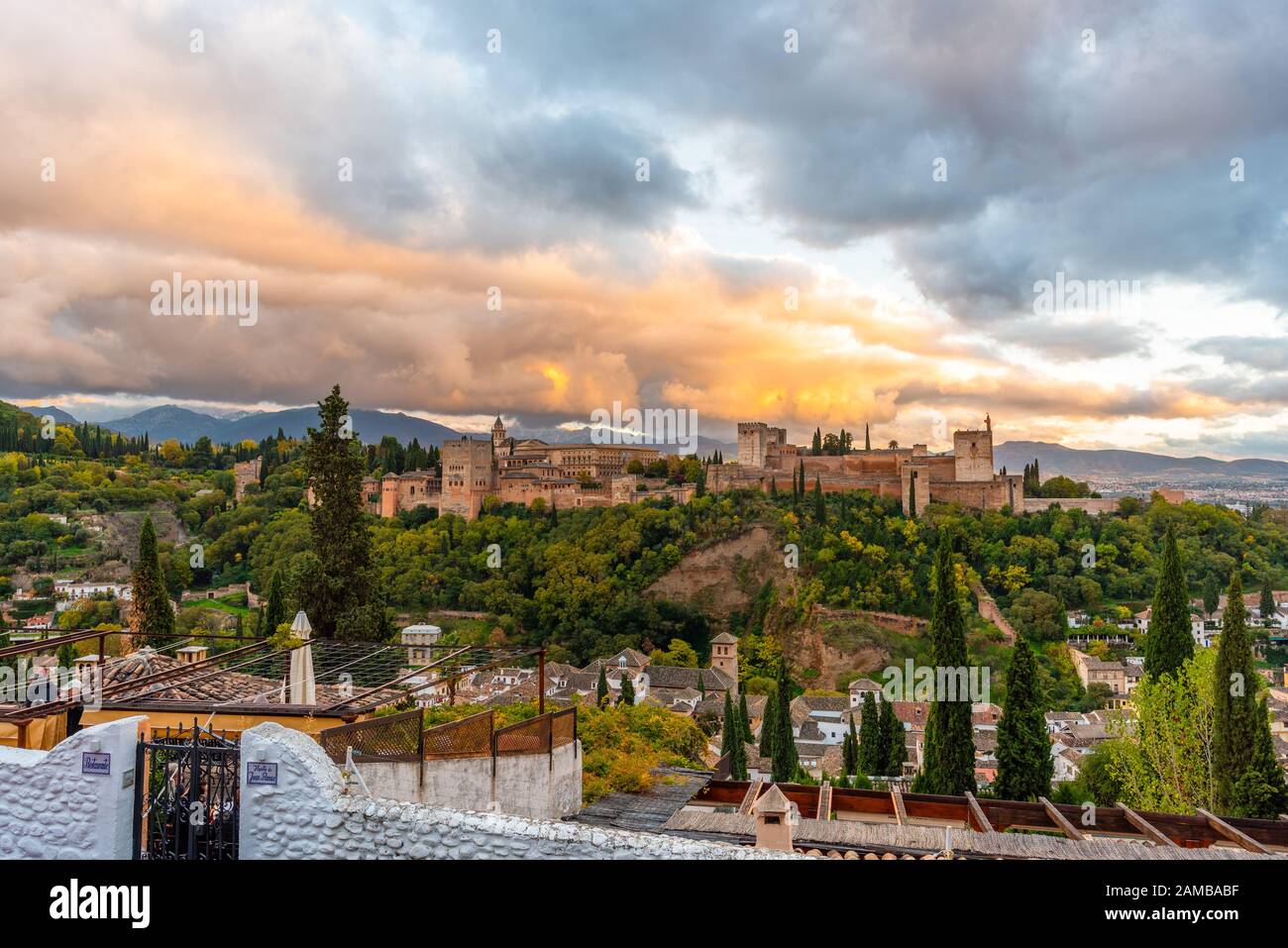
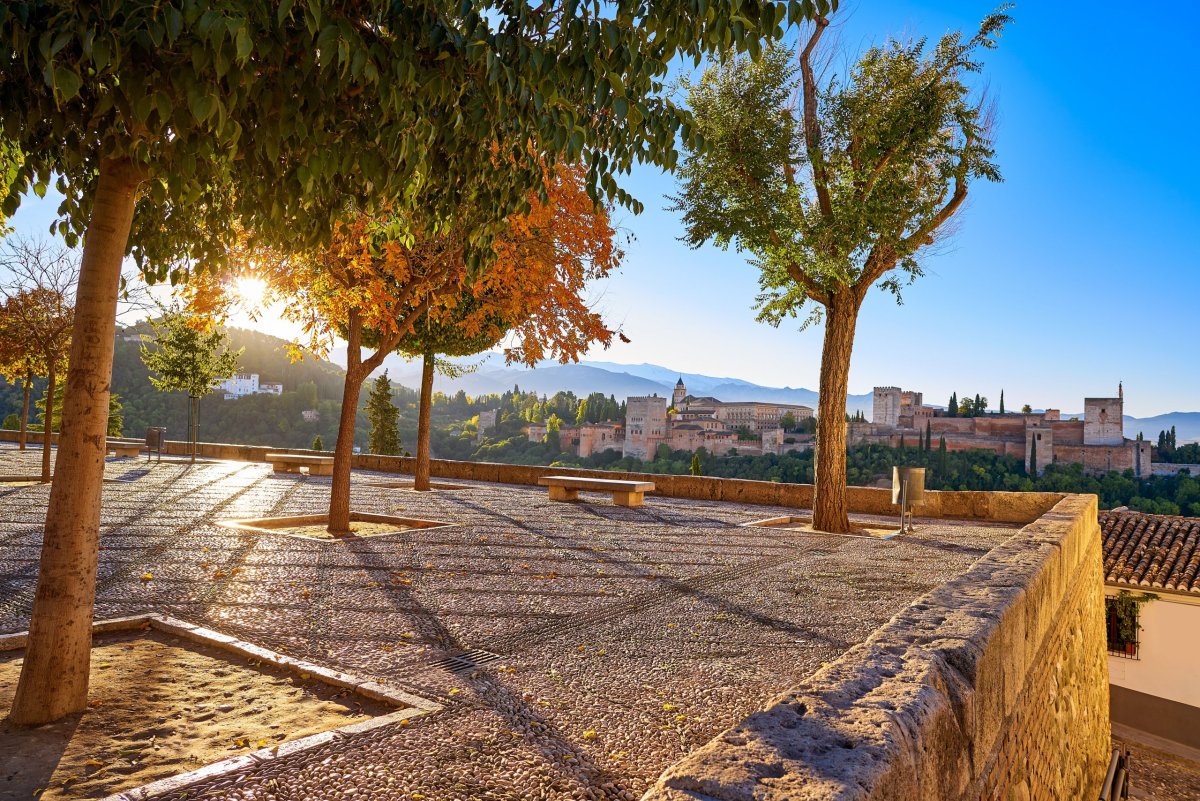
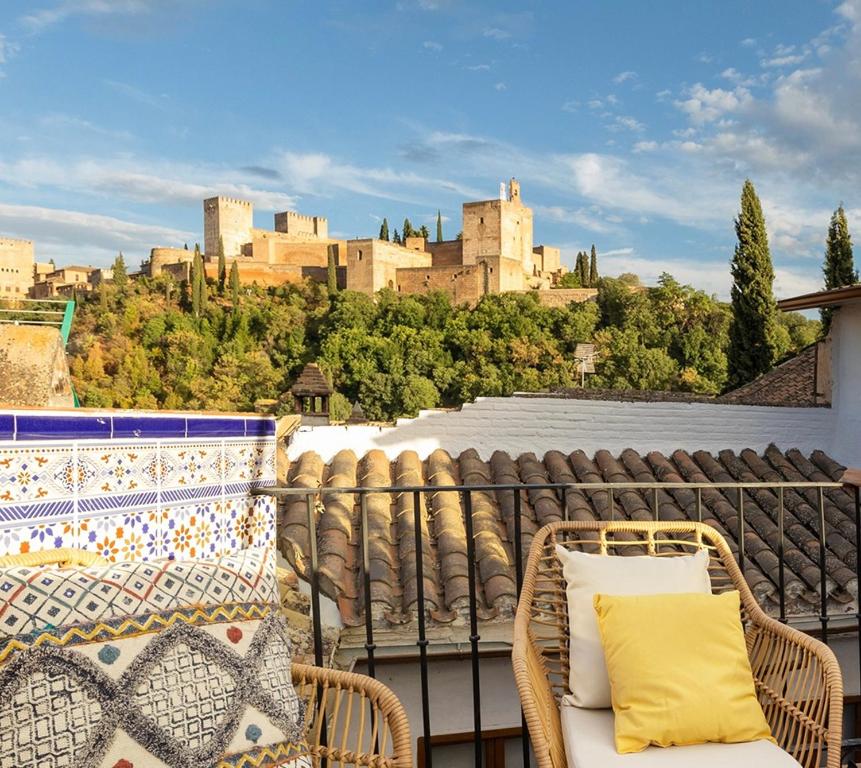
This plaza in the Albaicín quarter, just in front of the Iglesia de San Nicolás, delivers the classic postcard skyline shot: the full Alhambra silhouette with the Sierra Nevada rising behind it. Position yourself along the low wall facing the hillside to fit the Alcazaba, Nasrid Palaces, and Generalife gardens in one frame. It sits outside the ticketed complex, so no Alhambra Palace Tickets are needed to shoot from here, though it gets crowded near sunset.
The Generalife's long water-channel garden, lined with fountains and cypress hedges, gives a strong leading-line composition down the central canal toward the pavilion. Shoot from the entrance archway at the lower end for the classic framed view. This area sees lighter footfall than the Nasrid Palaces on most Alhambra Palace Tickets tours.
Visiting Alhambra Palace Tickets with children works best when you treat the complex as three separate legs rather than one long walk, since distances between the Alcazaba, Nasrid Palaces, and Generalife add up quickly for short legs. With a bit of pacing, this Granada Alhambra tour stays manageable even for families with toddlers.
Pushchairs are fine in the Generalife gardens and outdoor areas, but they cannot enter the Nasrid Palaces. Swap them free at the lockers near the Puerta del Vino, where staff can also lend a baby carrier for the timed slot.
Budget 15-20 minutes just to walk from the entrance to the Nasrid Palaces queue, so arrive well before your printed time slot rather than cutting it close. Build in a slower morning start since kids tire fast on cobblestones and slopes between zones.
Children under 8 should be held by hand inside the Nasrid Palaces for safety on narrow steps, and under-12s enter free with a reserved slot. Toddlers manage best in a carrier rather than on foot for the full route.
Keep the visit inside the palace short and focused, since young children lose interest fast in the crowded rooms. Point out water features and carved details as a simple game to hold attention during the fixed window.
Use the Generalife gardens for open-air breaks with fountains, hedges, and shade where kids can run off energy after the palace's tighter spaces. Benches and picnic corners are scattered throughout, useful for spacing out an Alhambra Palace Tickets tour across a full morning.
Toilets, water fountains, and snack kiosks are spread near the main entrance and through the gardens, with baby-change tables in the larger restrooms. Carry water and snacks anyway, since kiosks can queue up at peak midday hours.
Real experiences from real travelers
We booked Alhambra Palace Tickets a month ahead and were glad we did, since the Nasrid entry slot is fixed and the queue outside the Puerta del Vino was already long by nine. Standing under the muqarnas ceiling of the Hall of the Two Sisters, the plasterwork looks like frozen honeycomb once the light shifts. Bring water, the courtyards get very warm in June.
What surprised me most was the sound, not the sight. Channels run through the Generalife gardens and along the walls, so there is constant trickling even in the hot upper terraces. The Sierra Nevada snow still visible in May made the whole Granada Alhambra tour feel unreal in the best way.
Our skip-the-line Alhambra entry meant we walked past a crowd of maybe two hundred people at the main gate. Morning light in the Court of the Lions is soft and the marble is still cool underfoot. The carved Arabic inscriptions repeat the same phrase hundreds of times across the walls, which our guide pointed out.
The Alcazaba towers give the best wide view over the white Albaicín rooftops and the Darro valley below. It does get shoulder-to-shoulder in the Nasrid Palaces and there is no way around that. Still, the Palace of Charles V courtyard was almost empty when we passed through.
February meant cold mornings and thin crowds, and the Alhambra Palace Tickets tours we joined had barely fifteen people. Frost on the Generalife hedges with the mountains behind was something I did not expect from southern Spain. Wear proper shoes, the cobbles are uneven and slick after rain.
Booked the entradas a la Alhambra online in French and the process was simple enough. The Partal gardens with their still reflecting pool and the portico reflected in it were my favourite quiet corner of the whole site. Sound carries oddly in the tiled halls, everyone ends up whispering.
Late autumn sun came through the carved wooden lattice screens and threw geometric patterns across the floor of the Mexuar. Our Alhambra Palace Tickets tour guide explained the reflecting pools were designed to double the architecture, and standing at the Comares tower you see exactly that. The whole complex is bigger than photographs suggest.
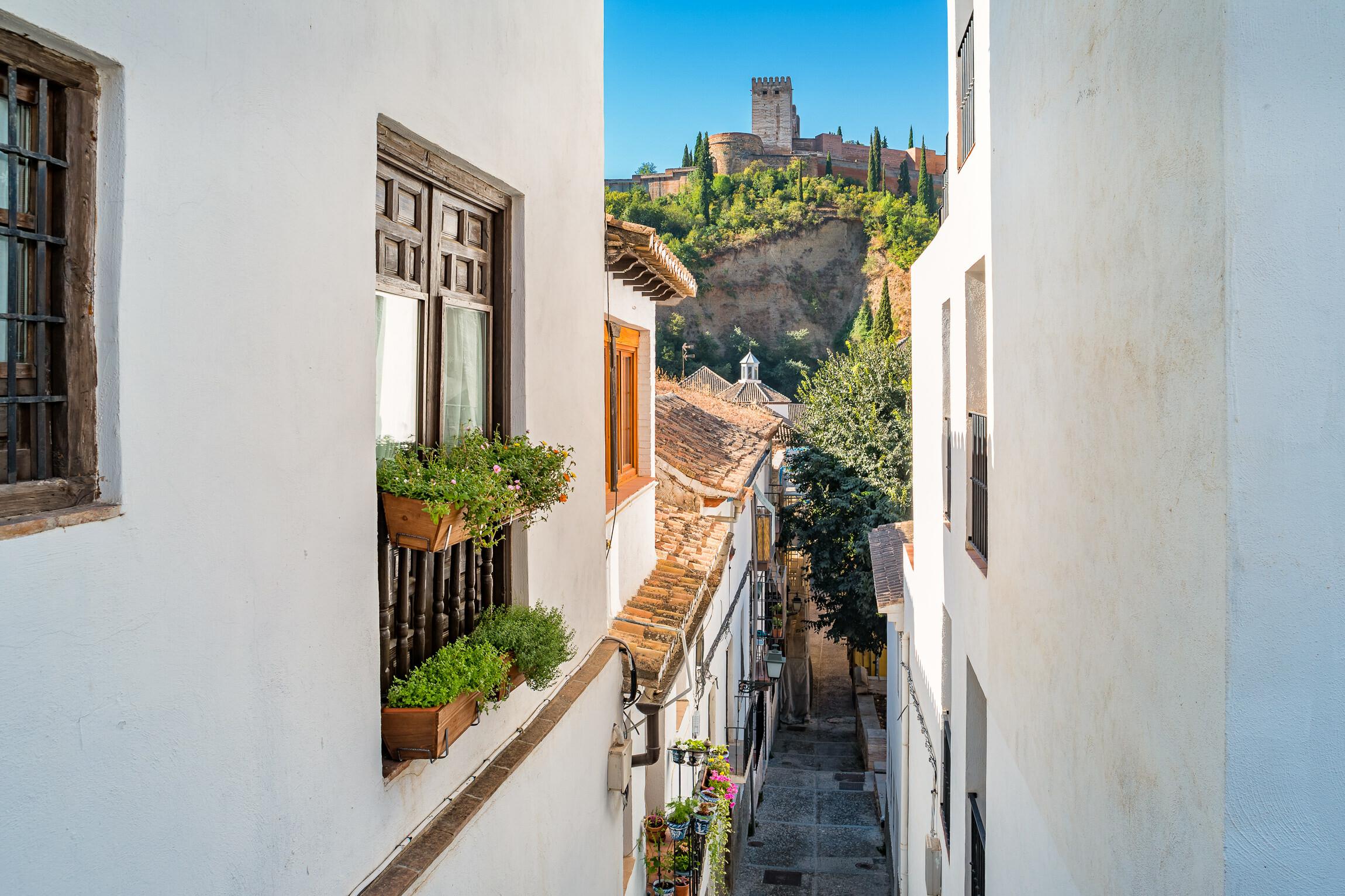
Coming from the Albaicín you climb through the Cuesta de Gomérez under elm trees before the walls even appear. Among Granada landmarks this is the one that rewards slowing down, especially the ceramic tile dados that run waist-height through every hall. September heat was manageable in the shaded courtyards.
July afternoons on the upper terraces are punishing, though the cypress avenues in the Generalife give real shade. My Alhambra Palace Tickets tickets scanned without any trouble at the entrance. The view of the fortress lit up after dark from across the valley is a separate experience worth catching.
The Nasrid Palaces are the reason to come, but the Alcazaba ruins gave me a better sense of the fortress as a military site. UNESCO heritage listing makes sense the moment you see the scale of the carved stucco and the tilework. Spring wildflowers were out along the perimeter walls.
Everything you need to know for your journey
The Alhambra is open daily from 08:30 to 20:00, and Alhambra Palace Tickets holders should plan their visit around this full schedule.
Yes, admission to the Nasrid Palaces ends one hour before the site's closing time, and access is strictly limited to the time slot printed on your ticket.
Airport-style security screening with bag checks operates at the main entrances, and large suitcases or wheeled luggage are not permitted inside.
Personal photography without flash equipment is allowed throughout most of the complex, though tripods and drones require prior authorization.
Arriving between 08:30 and 10:00 offers cooler temperatures and thinner crowds, making it the best window for an Alhambra Palace Tickets tour in summer.
There is no strict dress code, but comfortable walking shoes are strongly recommended due to cobblestone paths throughout the grounds.
Food and drink are not allowed inside the Nasrid Palaces, though water is permitted throughout the grounds given the heat.
Bus routes C30 and C32 run directly from Plaza Nueva to the Alhambra entrance in about 20 minutes, offering an easy alternative to driving.
Yes, children under 12 receive free entry, and the general day tour suits families, though strollers are impractical inside the Nasrid Palaces.
Official tickets are generally non-refundable once booked for a specific date and Nasrid Palaces slot, so check the operator's terms before purchasing Alhambra Palace Tickets.
The Albaicín quarter and Mirador de San Nicolás are both within a short walk or drive and pair naturally with an Alhambra Palace Tickets visit.
Yes, a passport or national ID matching the name on your ticket is required and checked at every entry point.
A plaza in the Albaicín with a classic panoramic view of the Alhambra against the Sierra Nevada. Popular at sunset for photographers and locals alike.
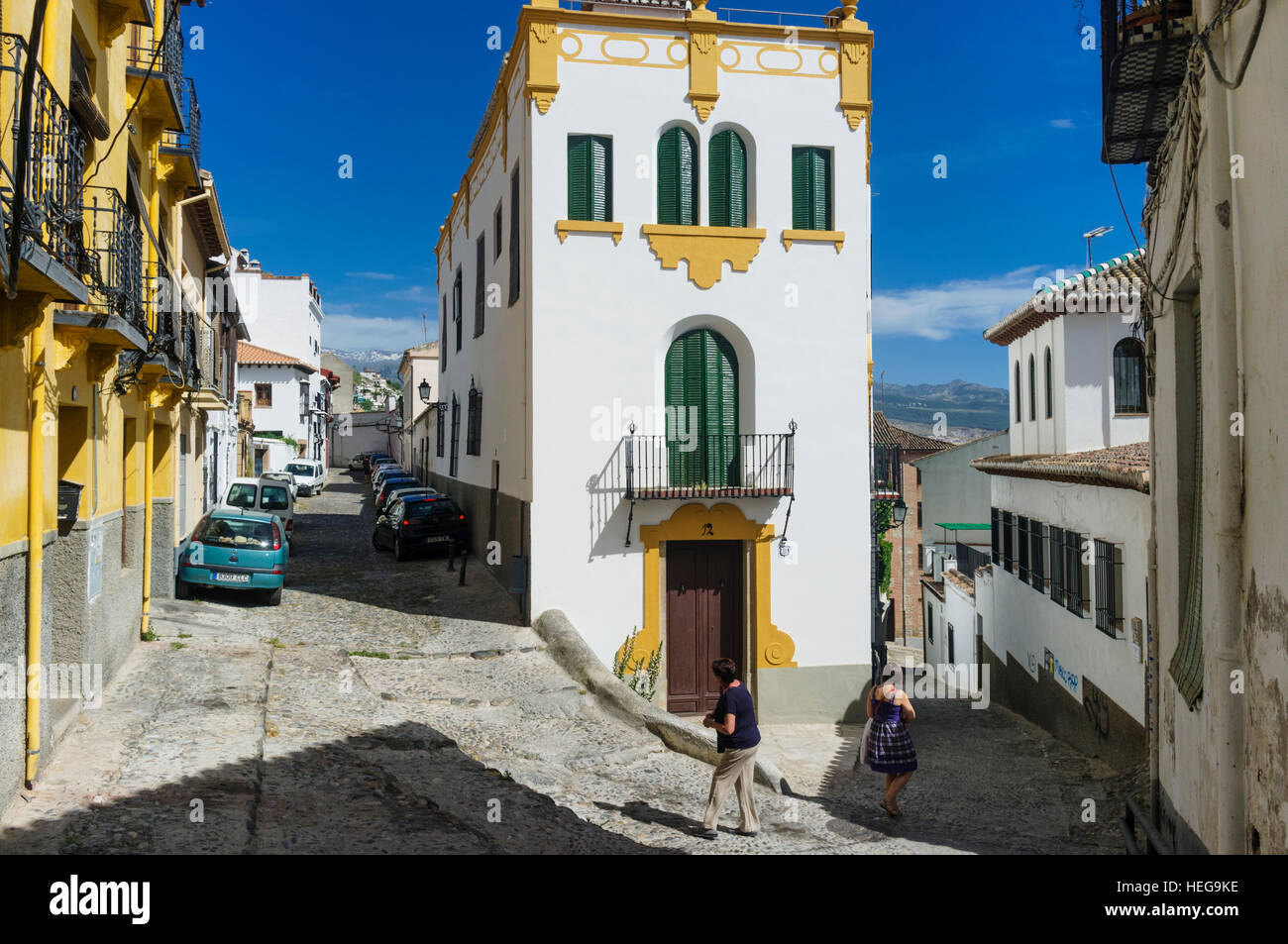
Granada's historic Moorish old town with narrow cobbled streets and whitewashed houses. A UNESCO-listed district adjoining the Alhambra hill.
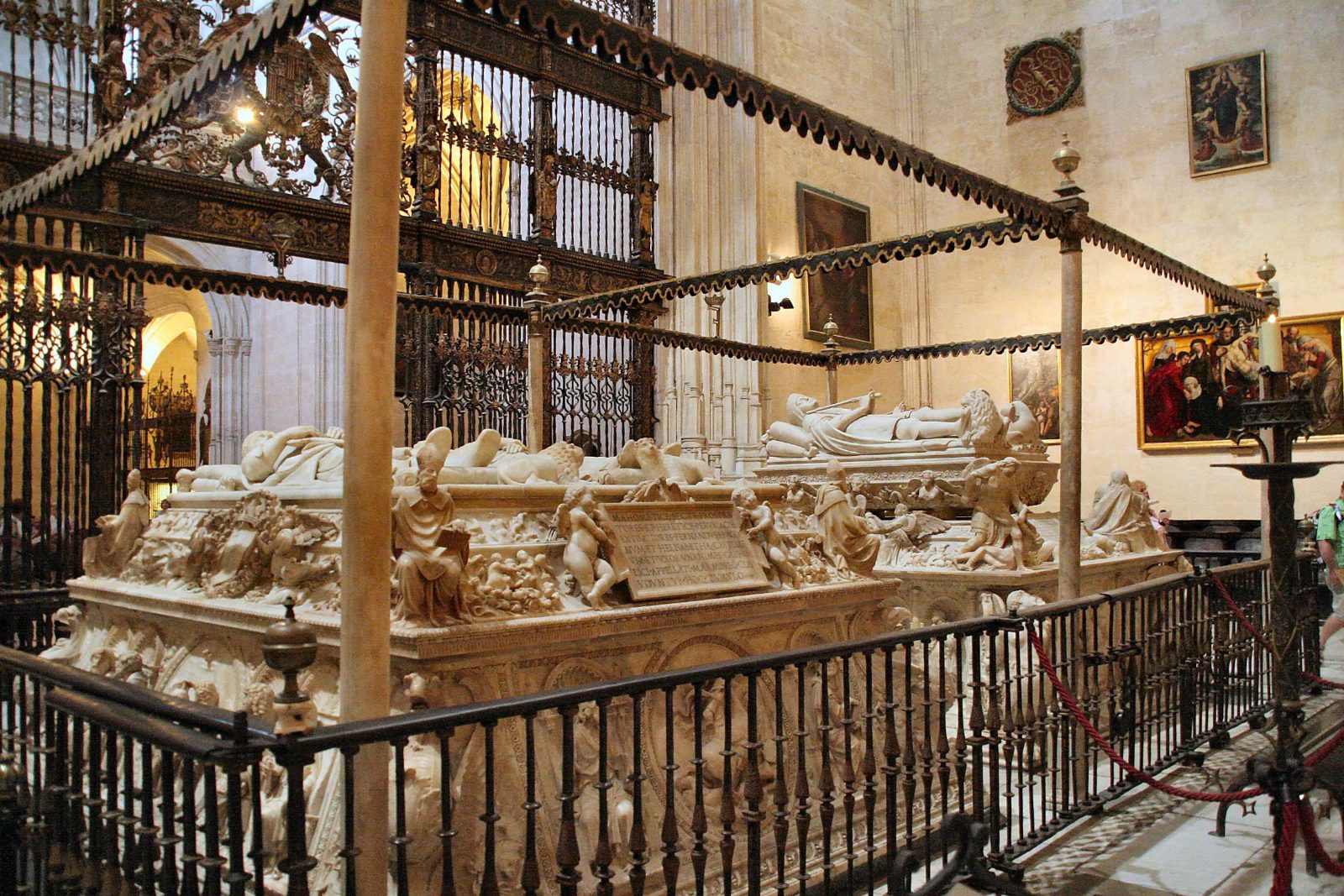
The Royal Chapel holding the tombs of the Catholic Monarchs Ferdinand and Isabella. Located beside Granada Cathedral in the city center.
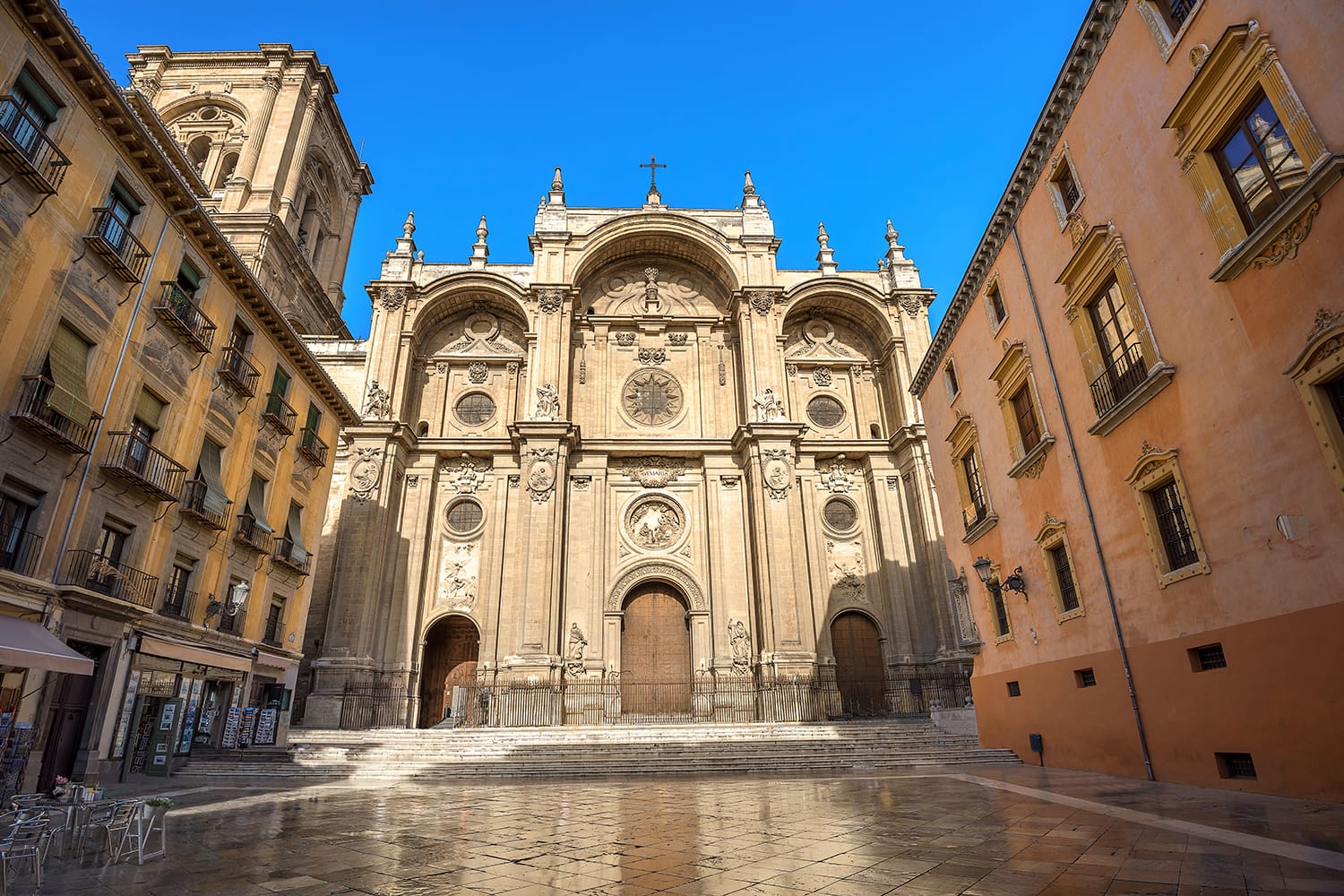
A Renaissance-style cathedral begun in the 16th century near the historic center. Notable for its ornate main facade and gilded chapels.
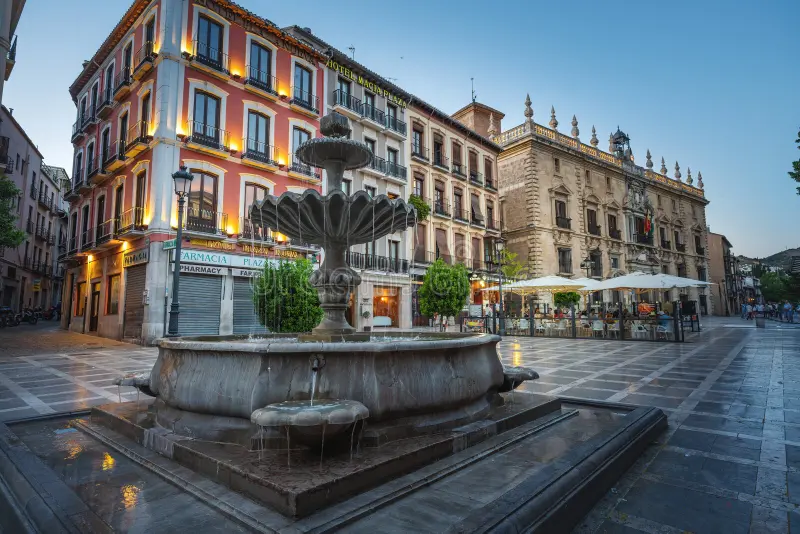
One of Granada's oldest squares, a common starting point for walks up to the Alhambra. Lined with cafés and close to the Darro River.
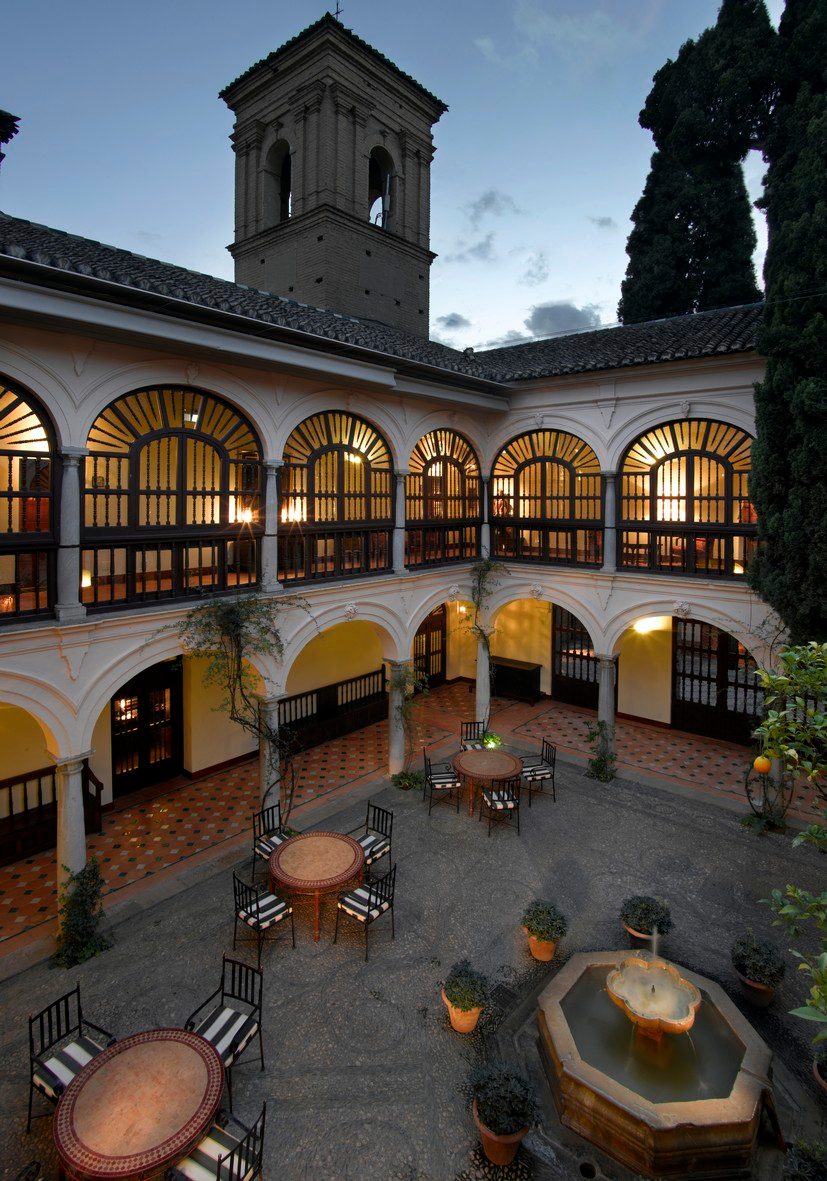
A historic parador set within a former convent inside the Alhambra complex itself, offering direct proximity to the monument.
A cluster of boutique guesthouses and carmen-style properties in the historic Moorish quarter across the valley.
A quieter neighborhood south of the Alhambra hill with mid-range hotels and traditional tapas bars.
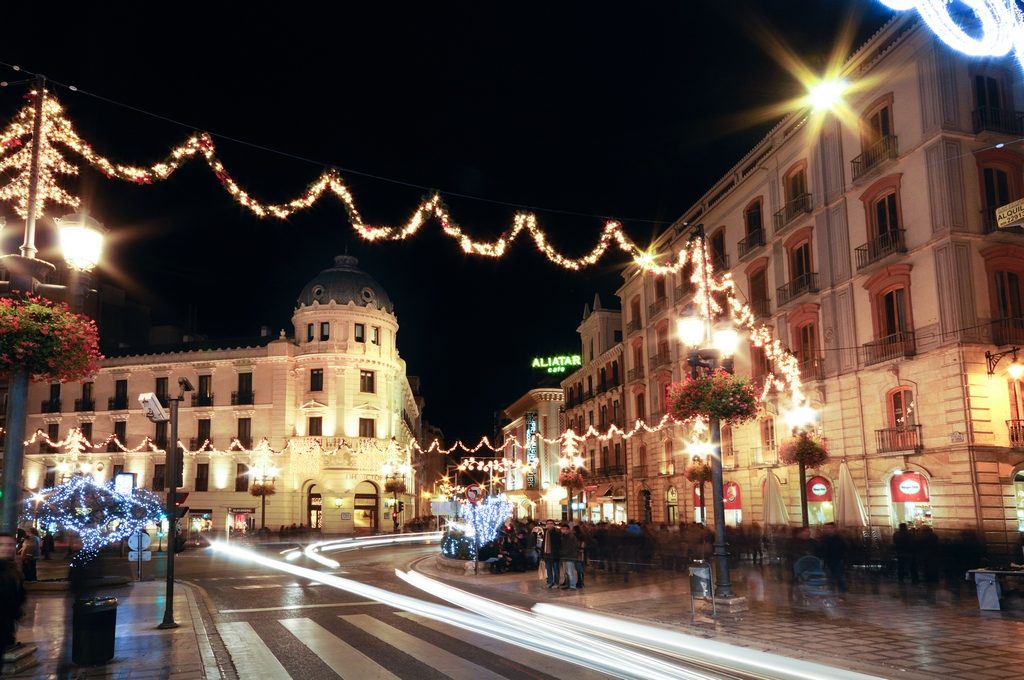
Budget-friendly hostels and hotels clustered around Granada's commercial center, well connected by bus to the Alhambra.
Join thousands of happy travelers who have discovered this incredible experience
Book Your Experience Now